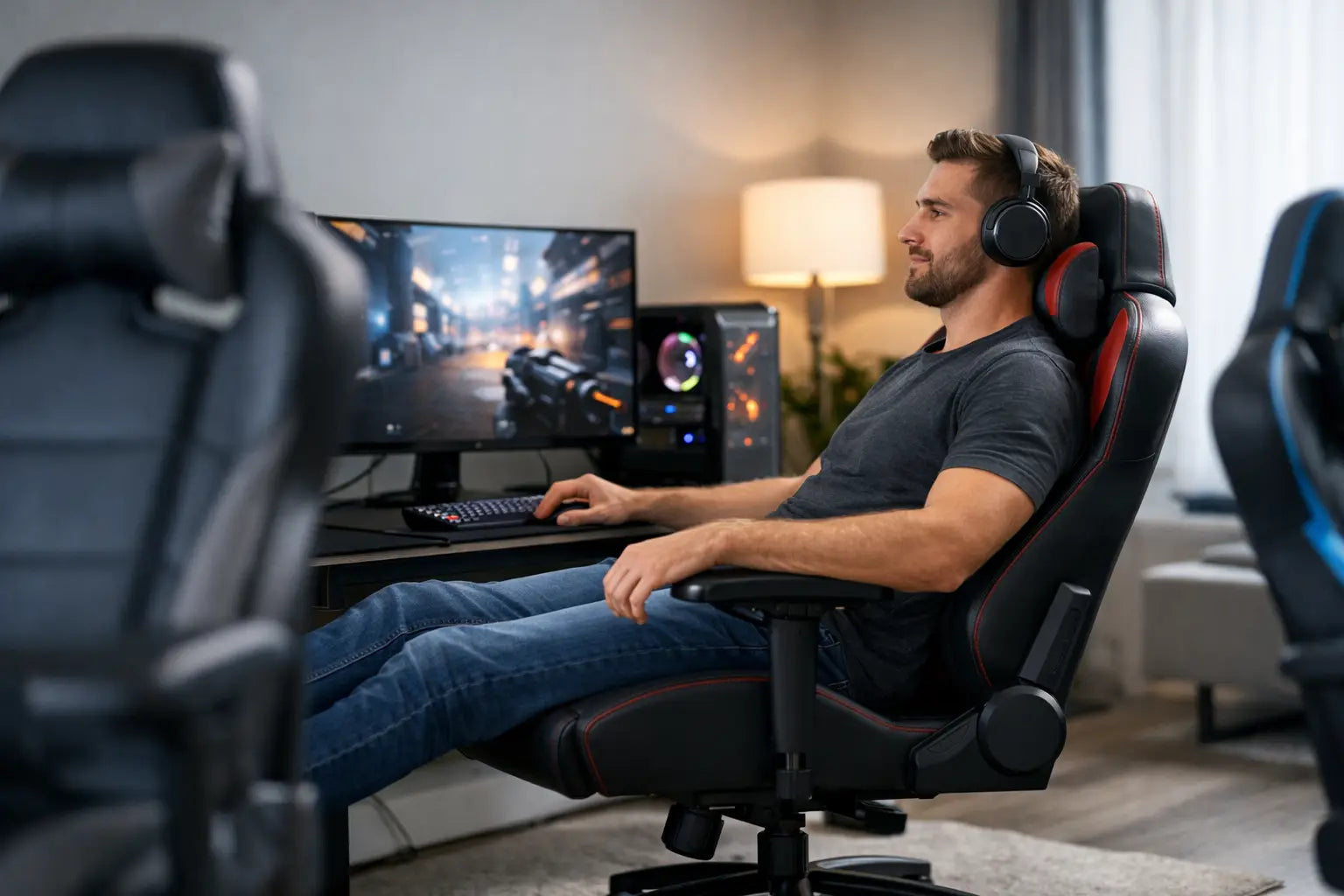
What Gaming Chair Supports Tall Users Best?
If you’re over six feet tall, you already know the usual problem. A lot of gaming chairs look impressive in photos, then feel cramped the second you sit down - the head pillow lands at your shoulders, the seat base cuts into your thighs, and the backrest stops short where you need support most. That’s why the better question is not just what gaming chair supports tall users, but what kind of support actually holds up during long sessions.
A tall-friendly gaming chair is less about flashy styling and more about proportion. The right chair should match your height, leg length, shoulder width, and the way you actually use your setup. If you game for hours, stream, work from the same desk, or switch between keyboard play and a racing rig, those details matter fast.
What gaming chair supports tall users in real use?
The short answer is this: a gaming chair supports tall users well when it offers a higher backrest, a deeper seat, a strong weight capacity, and enough adjustability to keep your body aligned without forcing you into one posture.
That sounds simple, but tall users are often dealing with a few fit issues at once. Height is only part of it. Someone who is 6'3" with long legs may need a different seat profile than someone who is 6'3" with a broader upper body. A chair can technically list a tall-user recommendation and still miss the mark if the seat pan is too short or the lumbar curve hits too low.
This is where premium seating starts to separate itself from budget models. Better chairs are usually built with larger frames, more stable tilt mechanisms, denser foam, and adjustment ranges that don’t feel like an afterthought. For buyers building a serious gaming or work-play setup, that difference is not cosmetic - it’s the difference between a chair that feels custom and one that feels compromised.
The specs that matter most for tall users
When shoppers ask what gaming chair supports tall users, they often start with maximum height recommendations. That’s useful, but it should never be the only filter.
Backrest height
A taller backrest is essential because it determines whether your upper back, shoulders, and head are actually supported. If the chair ends too low, your posture takes over the job. Over a long session, that usually means tension across the traps and neck.
For tall users, the headrest should sit at or above the natural position of the head, not halfway down the neck. If a removable pillow is included, it needs enough travel to be positioned correctly. Many standard gaming chairs fail here because the harness slots and pillow straps are fixed too low.
Seat depth
This is one of the most overlooked measurements. Tall users usually need a deeper seat so the thighs are supported without leaving a large gap behind the knees. Too shallow, and your legs carry more pressure than they should. Too deep, and you lose back contact unless you slide forward.
The sweet spot depends on your leg length, but generally you want solid thigh support with a small amount of clearance at the knees. That balance helps circulation and keeps your hips in a more stable position.
Weight capacity and frame size
A higher weight rating does not automatically mean a better fit for tall users, but it often signals a stronger frame and wider seating platform. That matters because taller users tend to place more leverage on the chair through longer limbs and a higher seating position.
A chair with a reinforced steel frame, heavy-duty base, and reliable lift mechanism usually feels more planted. That stability becomes especially important if you recline often or shift posture throughout the day.
Seat height range
Tall users need enough seat height to keep their knees at a comfortable angle while their feet stay planted. If the seat won’t raise high enough, the hips sit too low and the knees ride up. That posture gets uncomfortable quickly, especially during desk use.
The catch is desk height. A taller chair can solve one issue and create another if your desk or keyboard tray is fixed too low. The best setup is always a system - chair, desk, monitor, and armrests working together.
Armrest adjustment
4D armrests can make a major difference for taller users because shoulder width and elbow position vary so much. Armrests that adjust for height, width, depth, and angle give you more control over shoulder tension and wrist alignment.
This matters even more if you split time between gaming, editing, and general computer work. Fixed armrests often lock taller users into a shrugging posture, which gets old fast.
Where many gaming chairs fall short
A lot of chairs marketed as "big and tall" are really just wider. That can help some users, but width alone does not solve the core fit problem. If the lumbar support lands in the wrong spot or the headrest sits too low, the chair still won’t feel right.
Another common miss is overly aggressive side bolstering. Bucket-style seats look race-inspired, but tall or broad users can find them restrictive, especially around the shoulders and thighs. If you like a performance aesthetic, that’s fine - just make sure the shape doesn’t reduce usable space.
Foam density is another quiet issue. Softer padding can feel great for ten minutes and disappointing after two hours. Taller users often compress seat foam faster, so support underneath matters just as much as the initial feel.
Features worth paying more for
If you’re investing in a premium setup, there are a few upgrades that genuinely earn their keep.
Integrated or adjustable lumbar support is a big one. Pillows can work, but built-in lumbar systems usually offer a cleaner, more stable fit. For tall users, the key is vertical placement. If the support cannot meet your lower back where it naturally curves, it becomes decoration.
Multi-lock recline and synchro-tilt are also worth attention. Not everyone sits upright the entire time, and a chair that supports movement tends to feel better over long sessions. Recline is not just about relaxing between rounds - it helps vary pressure points and reduce stiffness.
A larger seat base with cold-cure foam or similarly durable padding is another strong value point. It holds shape better and generally performs more consistently under extended use. For a chair that will see daily gaming, work, and content sessions, that durability pays off.
How to choose the right tall-user chair for your setup
The smartest way to shop is to think beyond your height alone. Start with your actual use case.
If your chair is mostly for competitive desk gaming, prioritize upright support, adjustable armrests, and seat height compatibility with your desk. If it is part of a hybrid space where you game, stream, edit, and watch content, recline quality and long-session comfort become more important.
If you have broad shoulders, look closely at upper-back width and side bolsters. If you have long legs, seat depth deserves extra weight in your decision. And if you’re outfitting a full premium station, consistency matters - the chair should match the level of the rest of your gear, not become the weak point in the room.
This is where a curated retailer can save time. Instead of sorting through endless low-detail listings, you can focus on chairs positioned for enthusiast buyers who care about real performance, not just racing stripes and buzzwords. That’s a better path when comfort, aesthetics, and build quality all matter.
A quick reality check on ergonomics vs gaming style
Some tall users assume they should skip gaming chairs entirely and buy an office chair. Sometimes that’s the right call. Office chairs often offer excellent ergonomics and a subtler look. But premium gaming chairs have improved a lot, especially in categories like adjustability, frame strength, and all-day support.
The right choice depends on what you value. If you want a more immersive, performance-driven design that fits a dedicated gaming room, a well-built gaming chair can absolutely work for a tall frame. If you prefer maximum ergonomic neutrality and a less stylized profile, an office-focused chair may feel more natural.
Neither category wins by default. Fit wins.
So, what gaming chair supports tall users best?
The best one is the chair that fits your body dimensions, not just your identity as a tall shopper. Look for a tall backrest, deeper seat, adjustable arms, strong frame, and support features that line up with your actual posture. Ignore marketing that only says "big and tall" without giving enough detail to back it up.
A great chair should make your setup feel more capable the moment you sit down. It should support long sessions, sharper focus, and a space that feels built for the way you play. If you’re upgrading your room with the same mindset you bring to every other performance purchase, choose the chair that finally feels like it was made on your scale.