Ebike vs Mobility Scooter: Which Fits You?
Picture two very different errands. In one, you want a fast, flexible ride to the coffee shop, office, or trailhead. In the other, you want stable, low-effort transportation that gets you through a store, neighborhood, or large property without strain. That is the real heart of ebike vs mobility scooter - not which product is better overall, but which one fits the way you move through life.
Both can be smart investments. Both use electric power. Both can reduce car trips and open up more independence. But they are built for different priorities, and mixing those priorities up is where buyers get frustrated. If you want performance, versatility, and a more active riding experience, an ebike usually leads. If you want comfort, accessibility, and easy everyday mobility with minimal physical demand, a mobility scooter often makes far more sense.
Ebike vs mobility scooter: the core difference
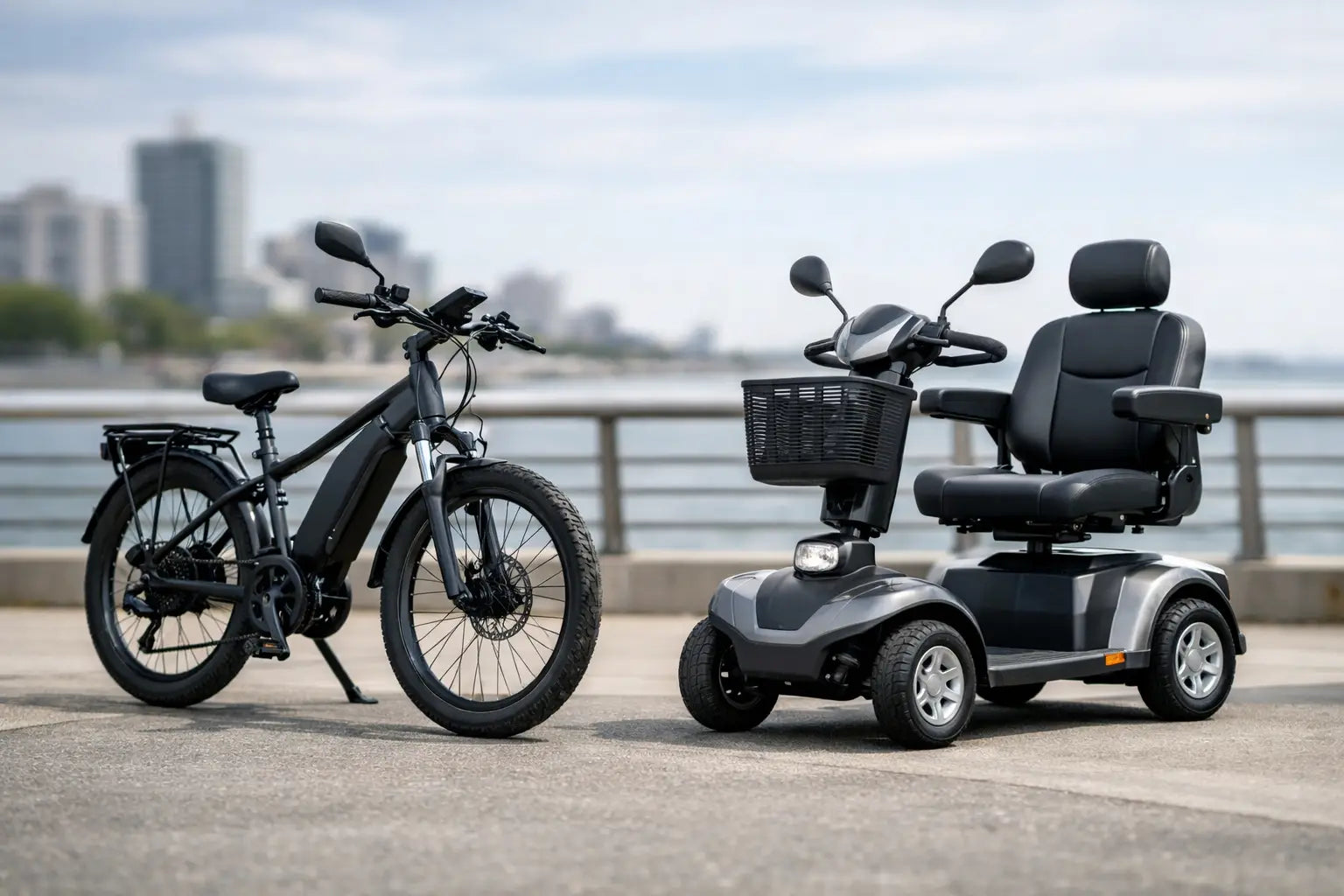
An ebike is still a bike at its core. It adds electric assist or throttle power to help you ride farther, climb hills, and manage daily commutes with less effort. You usually steer with handlebars, balance on two wheels, and either pedal, use a throttle, or both depending on the model.
A mobility scooter is a personal mobility device designed primarily for accessibility and comfort. It typically has three or four wheels, a padded seat, a platform for your feet, and controls that require much less physical exertion than riding a bike. Its design centers on stability, support, and convenience rather than athletic movement.
That difference affects everything else - speed, comfort, portability, storage, legality, and where each product feels natural.
Who should choose an ebike?
If your goal is transportation with energy and range, an ebike is the more dynamic option. It suits riders who want to stay active, cover longer distances, and move through streets, bike lanes, and recreational paths with more freedom. For many adults, an ebike hits a sweet spot between a regular bicycle and a small electric vehicle.
Ebikes are especially appealing if you still enjoy the act of riding. Even when the motor is doing part of the work, you are usually balancing, steering actively, and often pedaling. That creates a more engaged experience. For commuters, hobby riders, and anyone replacing short car trips, that can feel like a major upgrade.
There is also a strong lifestyle advantage. Ebikes tend to look and feel more performance-oriented, with options ranging from sleek urban commuters to fat-tire adventure models. If you value innovation, design, and versatility, this category has a lot of appeal.
The trade-off is that an ebike demands more from the rider. Mounting and dismounting can be harder than using a scooter. Balance matters. Road awareness matters. If you have limited leg strength, reduced coordination, or a condition that makes traditional cycling uncomfortable or unsafe, the benefits of an ebike may not outweigh the effort.
Who should choose a mobility scooter?
A mobility scooter is built for support first. If walking long distances is tiring, painful, or unreliable, a scooter can make everyday movement much easier. That includes shopping trips, neighborhood outings, large campuses, event spaces, and home or property use.
Comfort is a big reason people choose this category. You sit upright in a supportive seat, keep both feet planted on the deck, and operate the controls with minimal strain. For users who want dependable independence without the physical demands of riding a bike, a mobility scooter is often the better fit by a wide margin.
Scooters also make more sense for many older adults and people recovering from injury or managing chronic mobility limitations. The focus is not on exercise or sporty handling. It is on getting from point A to point B with confidence and less fatigue.
The trade-off is versatility. A mobility scooter is generally less nimble on roads and mixed-use routes than an ebike, and many models are not meant for the same kind of all-day outdoor riding. If you want speed, long recreational rides, or a stronger sense of performance, a scooter may feel too specialized.
Comfort, stability, and ease of use
This is where the gap becomes clear.
A mobility scooter usually wins on immediate ease of use. The seated position is more relaxed, the platform is more supportive, and the extra wheels give many riders a greater sense of security. For anyone worried about balance, that matters a lot. You are not managing a bike frame at stoplights or putting a foot down every time you pause.
An ebike can still be very comfortable, especially step-through models with upright geometry, suspension, and wider tires. But comfort on an ebike is still tied to bike fundamentals. You are straddling or stepping through a frame, maintaining balance, and reacting to terrain more actively. For some riders that feels empowering. For others it feels like too much work.
If you are choosing for a parent, grandparent, or someone with a mobility challenge, this is the moment to be honest. The more important stability and low physical demand are, the stronger the case for a mobility scooter.
Speed, range, and where you can go
Ebikes usually have the edge in speed and overall travel flexibility. They are built to cover more ground efficiently, and many are practical for commuting or extended recreational rides. If your typical day involves a few miles at a time, changing terrain, or traffic-aware riding, an ebike is often the stronger tool.
Mobility scooters are usually slower, and that is by design. They prioritize control and comfort over quick transit. That slower pace works well in neighborhoods, shopping centers, sidewalks where permitted, and other lower-speed environments. It is less ideal if you are trying to replace a bike or zip across town.
Range depends heavily on battery size, rider weight, terrain, and usage style. Some scooters offer impressive range, and some ebikes fall short of expectations if used heavily on throttle power. Still, if distance and route flexibility are top priorities, ebikes tend to offer more room to scale up.
Storage, transport, and everyday practicality
A product can be perfect on paper and still be wrong for your setup at home.
Ebikes are often easier to integrate if you already have bike storage, a garage, or a secure outdoor area. They may fit on some vehicle racks, though weight can be a challenge with heavier models. If your life already supports bicycles, adding an ebike can feel natural.
Mobility scooters vary a lot. Some are travel-friendly and designed to break down for transport. Others are larger, heavier, and better suited to staying at home or moving short distances from a vehicle lift. Before buying, think about doorways, ramps, elevators, trunk space, and charging access.
This is one of the biggest depends areas in the whole ebike vs mobility scooter decision. A compact scooter can be easier to use day to day than a heavy ebike. But a full-size scooter can also be harder to transport than many buyers expect.
Cost and long-term value
Both categories span a wide price range. Premium materials, battery quality, suspension, branded components, and range upgrades can move prices quickly.
Ebikes often deliver strong value for buyers who want one machine to handle commuting, recreation, and errands. If it reduces car use or replaces a second vehicle for local trips, the return can feel substantial.
Mobility scooters deliver value in a different way. Their payoff is less about adventure and more about access. If a scooter makes stores, appointments, community events, and daily routines easier and less exhausting, that value is immediate and meaningful.
The smartest purchase is not the one with the longest feature list. It is the one that solves your actual transportation problem with the least friction.
Legal and access considerations
Before you buy, check local and state rules. Ebike classes, speed limits, helmet expectations, and permitted riding areas can vary. A bike lane-friendly setup in one city may be more restricted in another.
Mobility scooters bring a different set of access questions. They are commonly used in pedestrian-oriented spaces, but practical access still depends on curb cuts, store layouts, building entrances, and local rules. Indoor turning radius and outdoor surface conditions matter more than many shoppers realize.
This is another reason not to buy purely on specs. Real usability depends on where you live and how you plan to ride.
How to decide without overthinking it
If you want electric transportation that feels active, versatile, and ready for longer rides, choose an ebike. If you want supportive, low-effort mobility designed around comfort and independence, choose a mobility scooter.
If you are stuck in the middle, ask one simple question: do you want help riding, or do you want help moving around? Help riding points to an ebike. Help moving around points to a mobility scooter.
For shoppers building a more capable, more enjoyable daily life with performance-driven gear, getting this choice right matters. The best tech is not just exciting - it fits your routine so well that you start using it constantly.
Choose the machine that matches your body, your routes, and your goals, and you will feel the difference every time you head out the door.