Arcade Room Furniture That Makes Play Better
A great cabinet can draw everyone into the room, but uncomfortable seating, tangled cables, and nowhere to set a drink can end the fun early. The right arcade room furniture turns a collection of impressive machines into a destination built for long sessions, easy hosting, and serious home entertainment.
The best setup is not always the one with the most furniture. It is the one that gives every piece of equipment enough breathing room, supports the way you actually play, and looks intentional when the screens are off. Whether you are building around a multicade, pinball machine, racing simulator, air hockey table, or a full wall of classic games, start with the experience you want guests to have.
Plan Arcade Room Furniture Around the Play Zone
Arcade equipment has a physical presence that standard living room furniture does not. A game cabinet needs clearance for players, pinball requires room for maintenance access, and a racing rig needs a comfortable entry and exit path. Before choosing chairs, tables, or storage, measure the equipment footprint and add the space needed for movement.
As a practical benchmark, allow at least three feet of open space in front of a cabinet or game table. More is better for multiplayer games, active titles, and rooms where people will be walking behind players. If two cabinets sit side by side, make sure their control panels do not force players to bump elbows. That small detail can decide whether a room feels premium or cramped.
The room's power plan deserves the same attention. Position furniture so outlets and surge-protected power strips remain accessible. You do not want to move a heavy arcade cabinet just to reach a plug, reset a breaker, or clean up cable runs. A console table, media cabinet, or narrow credenza along a wall can also conceal power accessories without blocking ventilation.
Build Zones Instead of Filling Empty Space
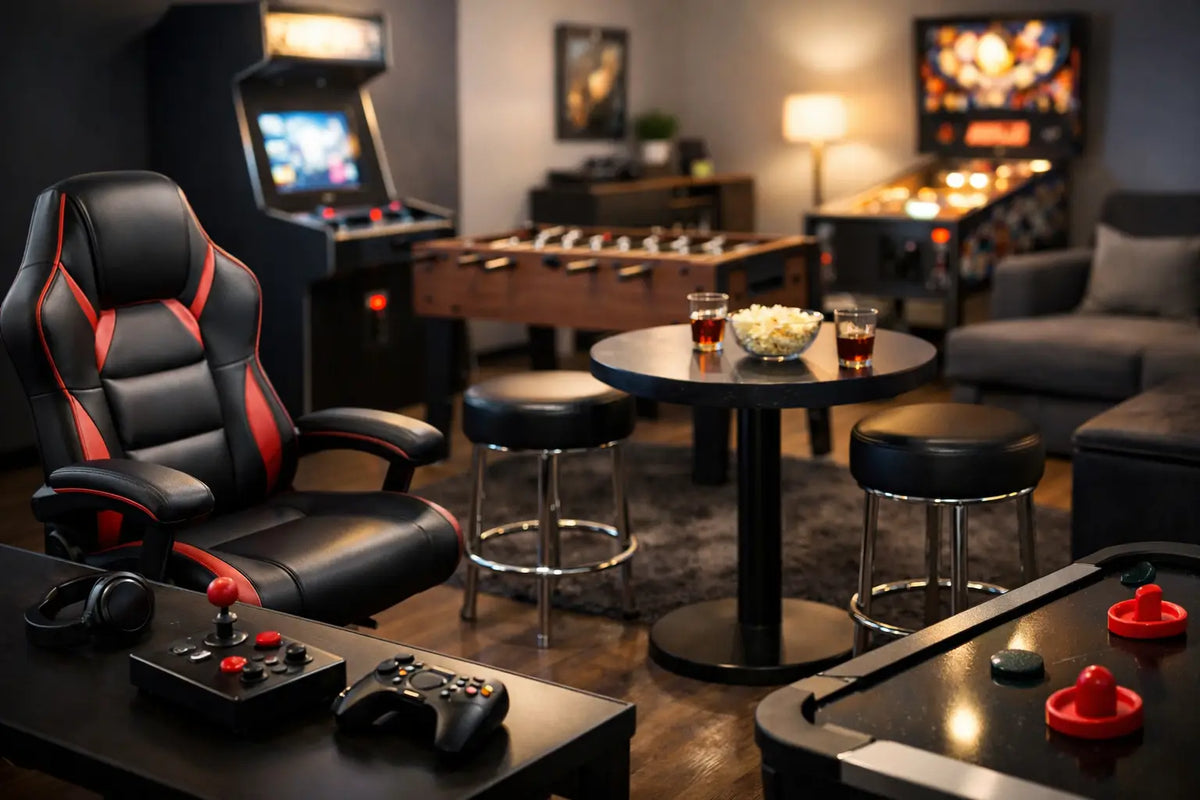
The strongest game rooms use clear zones. The active zone contains cabinets, pinball, game tables, or a racing simulator. The spectator zone gives friends a comfortable place to watch and wait for their turn. A recharge zone, even if it is only a compact beverage station and counter-height table, keeps snacks and drinks away from sensitive electronics.
This approach matters most in a shared family room, basement, or garage conversion. A dedicated arcade can lean darker and more theatrical. A mixed-use space benefits from furniture that looks at home beside a TV lounge, home office, or media setup. It depends on whether the room is a private escape, a hosting space, or both.
Choose Seating That Matches the Game
Seating is often where arcade rooms either become genuinely comfortable or stay stuck in showroom mode. Standard dining chairs may work near a card table, but they rarely support long racing, fighting, or console sessions. Gaming chairs and racing simulator seats offer better ergonomics for seated play, especially when they provide adjustable lumbar support, armrests, and a stable base.
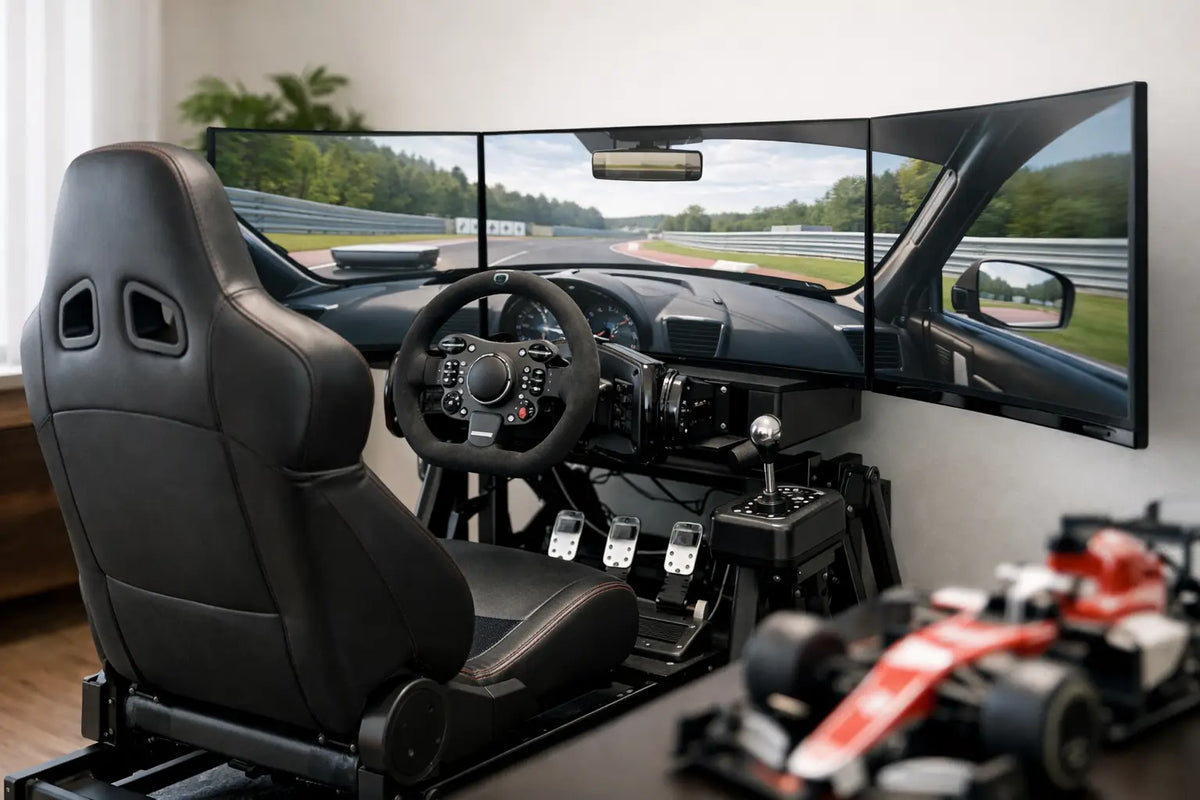
For a racing rig, the seat should be treated as part of the simulator, not as an accessory. Its mounting compatibility, recline range, seat width, and driving position affect immersion and control. A fixed bucket-style seat can feel more authentic for performance driving, while a reclining seat may be more practical when multiple family members use the rig.
For spectators, consider a low-profile sofa, modular lounge seating, or a pair of swivel chairs. Swivel seating is especially useful because guests can turn from the arcade action toward a large display or game table without dragging furniture across the floor. Avoid oversized sectionals in a compact room. They consume floor space quickly and can disrupt traffic around machines.
A few stools can solve more problems than people expect. Backless stools slide beneath a counter or game table, keep sightlines open, and provide flexible extra seating for game night. Choose commercial-grade options with a footrest and easy-clean upholstery if food and drinks will be part of the room.
Storage and Display Make the Room Feel Finished
Arcade collections grow fast. Controllers, headsets, cables, spare parts, cleaning supplies, board games, and physical media can overwhelm a room that has no storage plan. Closed storage keeps visual noise down, while open shelving can make selected collectibles, console boxes, and memorabilia part of the design.
A media console is useful for housing consoles, network equipment, and accessories, provided it offers proper airflow. Look for cabinet doors or open-back sections that allow heat to escape. For VR headsets and handheld devices, a dedicated charging drawer or shelf prevents the familiar pile of loose cables from taking over the nearest tabletop.
Display shelving works best when it has a purpose. Use it to show a curated set of items that reinforce the room's personality: vintage game art, premium controllers, tournament trophies, model kits, or a few favorite collector pieces. Filling every shelf can make an otherwise polished room feel crowded.
Coffee tables and side tables should earn their place. They are valuable in a lounge zone for drinks, remotes, and snacks, but they should not create a trip hazard near active gameplay. Rounded corners are a smart choice in tighter rooms, particularly when children or fast-moving guests will be around.
Materials Matter in a High-Use Game Room
Arcade room furniture should look elevated, but it also has to stand up to real use. This is a room for competitive matches, celebrations, movie nights, and the occasional spilled drink. Performance fabric, quality faux leather, and durable vinyl are often easier to maintain than delicate upholstery. Powder-coated steel, solid wood, and high-pressure laminate surfaces can handle more abuse than lightweight particleboard furniture.
Dark finishes are popular because they complement screens, LED lighting, and classic arcade artwork. They also hide scuffs better than bright white surfaces. Still, an all-black room can feel flat without contrast. Wood tones, brushed metal, colored bar stools, or a statement wall can bring warmth and depth without distracting from the games.
If the room is in a basement or garage, think beyond appearance. Temperature swings and humidity can affect both furniture and electronics. Use moisture-resistant flooring, avoid placing upholstered pieces directly against damp walls, and leave enough clearance for air circulation around equipment. A more controlled environment protects a premium arcade investment over time.
Lighting Should Support Screens, Not Fight Them
Lighting can make an arcade feel cinematic, but glare is the enemy. Avoid placing bright lamps directly opposite screens or glossy playfields. Instead, use dimmable ambient lighting, wall sconces, or indirect LED strips behind displays and shelving. The goal is enough visibility to move safely and socialize without washing out the games.
Color-changing LEDs give the room flexibility. You can run cool blue for a futuristic simulator setup, warmer tones for a lounge-focused space, or colors that complement a favorite cabinet. Keep the effect controlled. A few intentional lighting layers look more sophisticated than competing strips on every edge of the room.
Sound deserves planning, too. Cabinet speakers, racing audio, and a home theater system can become overwhelming in a hard-surfaced space. Rugs, upholstered seating, acoustic wall panels, and curtains soften reflections while making the room feel more comfortable. A rug also helps define a lounge area, though it should not interfere with cabinet leveling or rolling chair bases.
Start With the Pieces That Cannot Be Compromised
When building in stages, buy the foundational pieces first: the arcade equipment, a proper seat for any simulator, durable storage for gear, and lighting that works with the room. Accent furniture can come later. This order prevents a common mistake: buying attractive pieces that leave too little space or budget for the setup that matters most.
Your Tech Haven shoppers often build across categories, and that is where thoughtful planning pays off. A racing simulator, gaming chair, arcade cabinet, and entertainment storage can feel like separate purchases, or they can become one high-performance room designed around how you play. Measure carefully, prioritize comfort, and choose materials that can keep up with the action.
The final test is simple: invite someone in, hand them a controller, and notice what they need next. A place to sit, set a drink, charge a headset, or watch the race is your cue for the next furniture upgrade. Build around those moments, and your arcade will keep calling people back for one more game.