How to Pick Drone Accessories That Matter
A drone setup can get expensive fast - not because the aircraft costs too much, but because the wrong add-ons pile up in a hurry. One extra battery makes sense. Five random accessories you never use do not. If you're figuring out how to pick drone accessories, the smartest move is to build around how you actually fly, not around what looks impressive on a product page.
That distinction matters whether you're flying for travel content, weekend fun, mapping work, or real estate shots. The best accessory for one pilot can be wasted money for another. A tighter, more intentional setup usually delivers better performance, easier packing, and fewer regrets after checkout.
How to Pick Drone Accessories for Your Type of Flying
Before you compare products, define the job. A casual pilot who flies in short bursts near home needs a different kit than a creator chasing sunrise footage or a professional who cannot afford downtime on location.
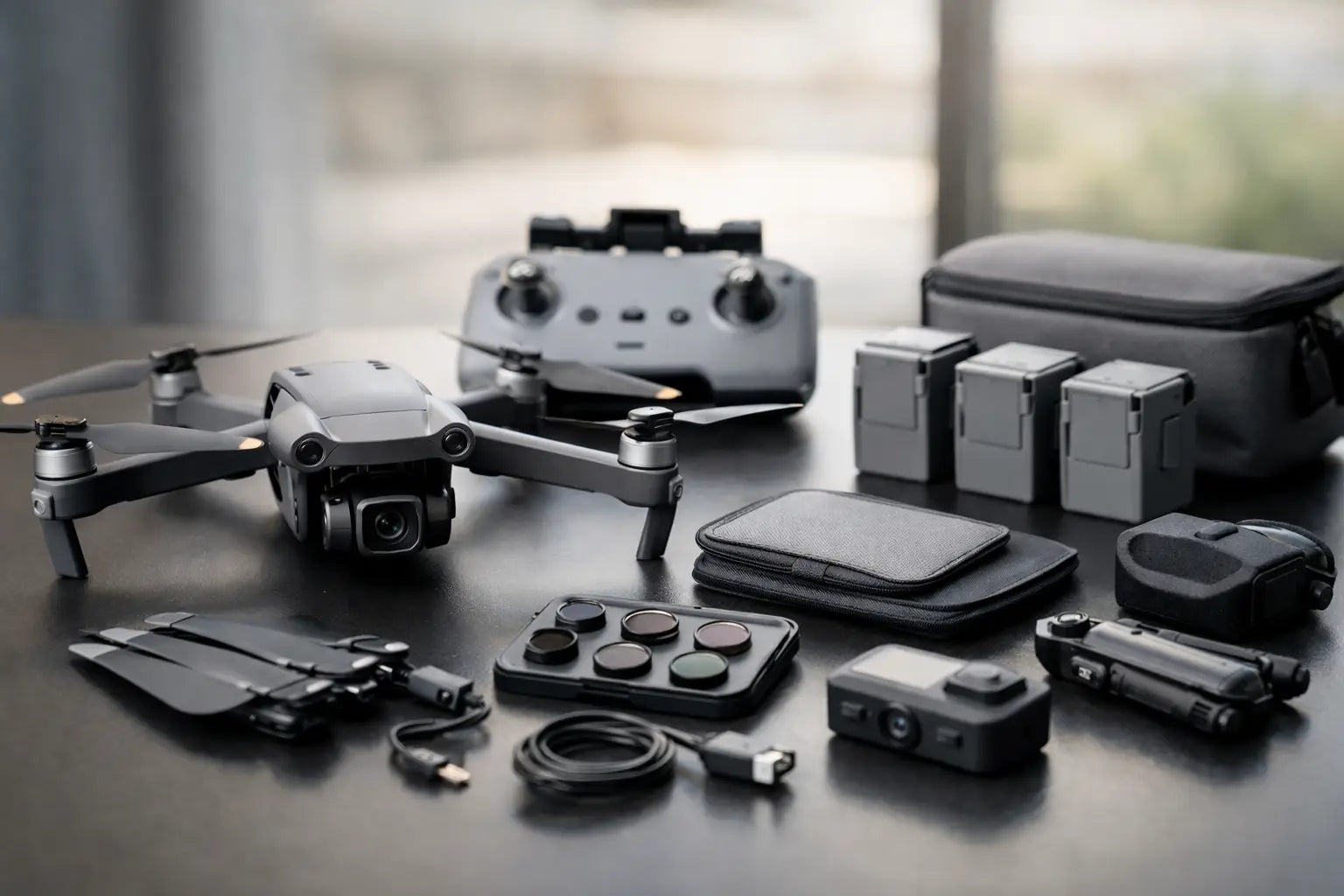
If your flights are mostly recreational, spare propellers, one or two extra batteries, and a reliable carrying case will probably deliver the biggest payoff. If you shoot video, neutral density filters, a multi-battery charger, and high-speed memory cards become much more important. If you travel often, compact storage, car charging options, and prop guards may deserve a closer look.
This is where many buyers overspend. They shop for the broad category instead of the specific use case. The result is a collection of accessories that sound useful but rarely leave the shelf.
Start With the Accessories That Solve Real Problems
The easiest way to choose well is to ask a simple question: what interrupts or limits your flights right now? For most pilots, the answer is one of three things - battery life, transport, or image control.
Batteries are usually the first smart upgrade because they extend actual time in the air. That sounds obvious, but battery buying still has nuance. More is not always better if you do not have a charging plan. Two extra batteries with a practical hub may be more valuable than four batteries and no efficient way to recharge between sessions.
Carrying cases also deserve more attention than they usually get. A good case protects your gear, speeds up setup, and makes travel less stressful. Hard cases offer stronger protection, which is great for road trips and frequent transport, but they add bulk. Soft cases and shoulder bags are easier to carry and often better for creators who want to stay mobile.
Then there are camera-focused accessories. Filters can transform footage in bright conditions, but only if you understand why you need them. If your drone work is mostly casual snapshots in auto mode, filters may not change much for you. If you shoot video and care about shutter control and smoother motion, they can become one of the most useful accessories in your bag.
Batteries and Charging: Buy for Rhythm, Not Just Quantity
Battery shopping is really workflow shopping. Think about how long you are typically out, how many flights you do per session, and whether you have access to power between locations.
A pilot who flies in a local park for 30 minutes may only need one spare battery. A content creator filming multiple scenes across an afternoon may need three or four, plus a hub that charges efficiently. Professionals often benefit from fast turnaround tools more than raw battery count.
Also pay attention to battery age, compatibility, and brand reliability. Saving money on questionable power accessories can cost more later if performance drops or charging becomes inconsistent. For premium drones, dependable power gear is not the place to get careless.
Cases, Bags, and Storage: Protection vs Portability
A case should match your routine. If your drone lives in a car trunk, travels to job sites, or gets packed with other equipment, stronger protection makes sense. If you hike with your gear or want a lighter everyday carry, a compact bag may be the better fit.
Look beyond the exterior. Interior layout matters. A smart storage design keeps batteries separated, accessories easy to reach, and setup time short. The best case is not always the biggest one. It is the one that keeps your system organized without turning every trip into a packing project.
Don’t Buy Camera Accessories You Won’t Use
Camera add-ons are where excitement can outrun practicality. Filters, landing pads, signal boosters, sun hoods, and tablet mounts all have a place, but not every drone owner needs all of them.
ND filters are a strong example. They are valuable for video shooters who want better exposure control in bright light. They are less essential for pilots who mostly capture stills or rely on automatic settings. Polarizing effects can help in some scenes, but they also add complexity. If you are new to aerial photography, mastering flight and composition may matter more than stacking camera extras on day one.
Memory cards are another easy place to make smarter choices. Not all cards are fast enough for high-resolution video, and not all cheap cards are trustworthy. A dependable, properly rated card is a boring purchase in the best possible way. It prevents headaches and protects the footage you actually care about.
Propellers, Guards, and Landing Gear
Spare propellers are not glamorous, but they are one of the most practical accessories you can buy. Even careful pilots deal with chips, bends, or rough landings eventually. Having replacements on hand means a minor issue does not cancel your next session.
Prop guards can be helpful for beginners, indoor pilots, or anyone flying in tighter areas. The trade-off is added weight and, in some cases, reduced flight performance. If your flying happens mostly in open outdoor spaces, you may not need them often.
Landing pads and extended landing gear are more situational. They help when you launch from dirt, sand, grass, or uneven ground. If you usually take off from clean pavement or a dedicated launch area, these may be lower-priority purchases.
Match Every Accessory to Your Drone Model
This sounds basic, but it is one of the most important parts of how to pick drone accessories. Drones are not universal platforms. Fit, weight, firmware behavior, and power requirements vary by model, and even small compatibility issues can turn a promising accessory into a frustration.
Always check that batteries, chargers, props, filters, and storage solutions are designed for your exact aircraft. Similar-looking drones can use very different components. With camera accessories, even slight fitment differences can affect gimbal movement or image quality.
Third-party accessories can offer value, but they require more scrutiny. Read the specs carefully and consider whether the savings are worth the uncertainty. For critical items like batteries and chargers, reliability should usually outrank bargain pricing.
Set a Budget Based on Value, Not Hype
A smart drone kit does not have to be massive. It has to be useful. For many buyers, the best first wave of accessories is a short list: extra battery capacity, safe transport, spare props, and storage that supports the camera specs of the drone.
After that, buy toward your next level of use. Maybe that means filters for more polished footage. Maybe it means a charging hub for longer travel days. Maybe it means a better backpack because your current case is slowing you down.
This staged approach keeps your setup future-ready without overloading your budget. It also gives you room to learn what your flying style really demands. Enthusiast gear is most rewarding when every piece earns its place.
The Best Drone Accessories Are the Ones You’ll Pack Every Time
The strongest accessory choices tend to be the least flashy. They protect your investment, keep you flying longer, and reduce friction between getting the drone out and getting the shot. That is the real standard to use when evaluating what belongs in your setup.
For pilots building a cleaner, more capable kit, the goal is not to own the longest accessory list. It is to create a system that feels intentional. That is where innovation meets excellence - not in buying more gear, but in choosing gear that makes every flight more capable, more confident, and more fun.
If you keep your focus on how you fly now and where you want your setup to go next, the right accessories become easy to spot.