Does Red Light Therapy Help Recovery?
You feel it the day after a hard lift, a long run, or even a weekend spent rebuilding your setup room - tight muscles, stiff joints, and that low-grade soreness that slows everything down. So, does red light therapy help recovery? In many cases, yes, but the real answer depends on what kind of recovery you mean, how consistent you are, and whether you’re using the right device for the job.
Red light therapy has moved well beyond wellness hype. For athletes, active professionals, gamers dealing with neck and shoulder tension, and anyone investing in performance-focused home tech, it stands out because it aims at a real problem: helping the body recover with less friction. The appeal is obvious. It’s noninvasive, easy to add to a routine, and doesn’t ask you to choose between convenience and a more advanced recovery setup.
Does red light therapy help recovery from workouts?
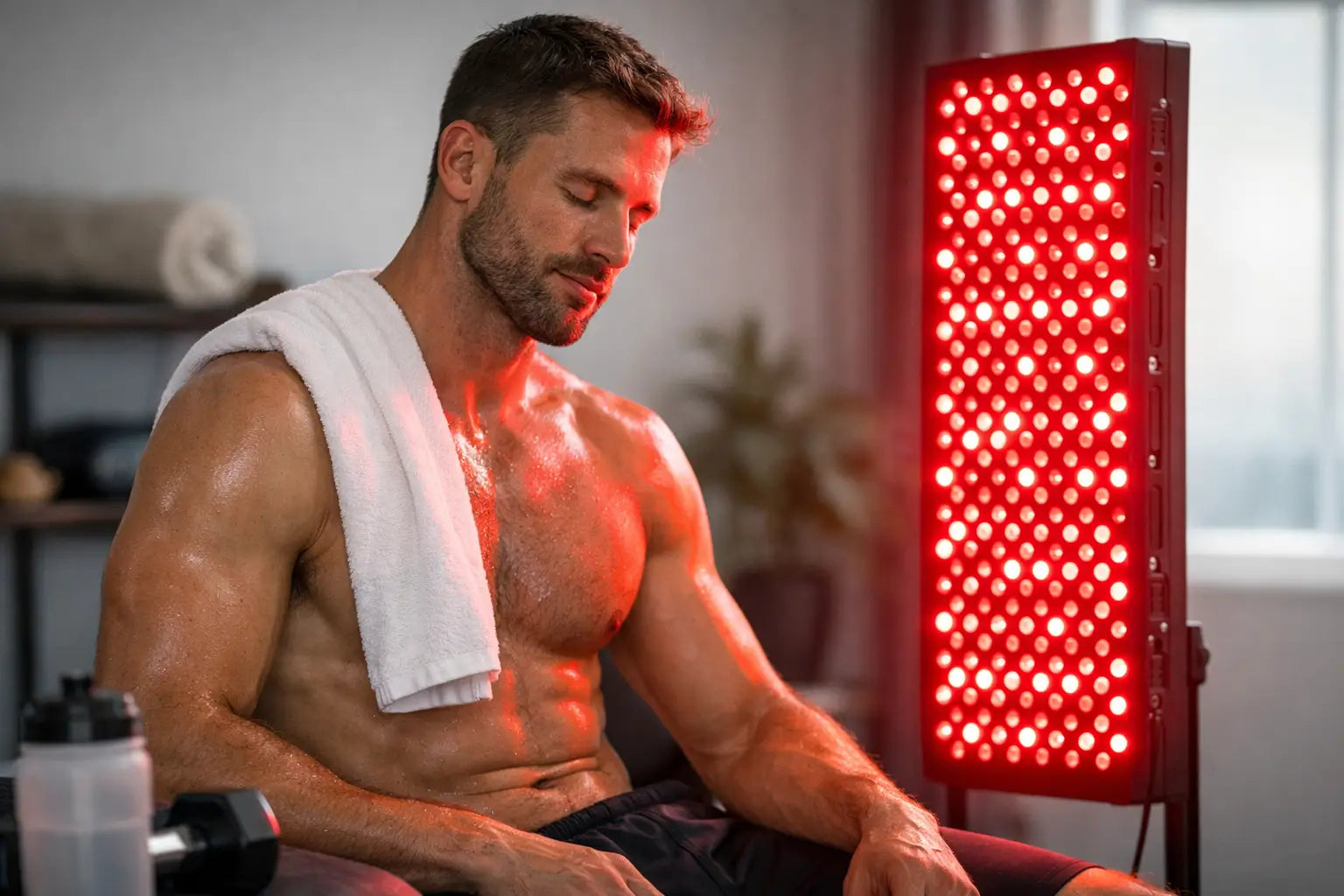
For post-workout recovery, red light therapy shows the most promise in areas like muscle soreness, perceived fatigue, and tissue support. The basic idea is that specific wavelengths of red and near-infrared light interact with cells in a way that may support energy production and circulation. That matters because recovery is not just about rest - it’s about how efficiently your body repairs and recalibrates after stress.
When people say they feel better after using red light therapy, they’re usually talking about one of three things. Their soreness feels less intense, they loosen up faster, or they feel ready to train again sooner. Those are meaningful gains, especially if you train frequently or work long hours at a desk and need your body to stay functional.
That said, red light therapy is not a magic reset button. If your training load is too high, your sleep is poor, and your nutrition is all over the place, adding light therapy won’t erase those gaps. It works best as part of a broader recovery strategy, not as a replacement for the basics.
How red light therapy may support recovery
The science behind red light therapy is still developing, but the leading theory is fairly straightforward. Light in the red and near-infrared spectrum may help mitochondria produce cellular energy more efficiently. More efficient cellular energy can support repair processes, and improved local circulation may help tissues recover after stress.
In practical terms, this is why red light therapy is often used for muscles, joints, and areas that take repeated strain. Think quads after leg day, shoulders after hours at a workstation, or lower back tension after a long commute. Recovery is rarely one big event. It’s usually the result of dozens of small improvements that help you bounce back more efficiently.
There’s also a reason red light therapy has become popular in premium home wellness setups. Unlike some recovery tools that require more effort or tolerance, light therapy is relatively low-maintenance. You stand, sit, or position the device, stay consistent, and let the session do its work. For buyers who value performance and convenience, that combination is hard to ignore.
Where it tends to work best
Red light therapy is most commonly used for muscle recovery, general soreness, minor joint stiffness, and repetitive-use discomfort. It may also be useful when you’re trying to stay more consistent with training by reducing the drag that soreness creates between sessions.
The strongest real-world use case is not usually severe injury. It’s that middle zone most active people live in - soreness, strain, fatigue, and stiffness that aren’t catastrophic but still chip away at performance. If you’re looking for support between workouts, after long gaming sessions, or during physically demanding weeks, this is where red light therapy often makes the most sense.
Where expectations should stay realistic
If you have an acute injury, major inflammation, or persistent pain with no clear cause, red light therapy should not be your only plan. It can be part of the picture, but it is not a substitute for medical evaluation, rehab, or structured treatment.
Results also vary by device quality, treatment time, wavelength, distance from the body, and consistency. A cheap device with weak output may not deliver much beyond the feeling that you tried something. That’s one reason shoppers in this category tend to move toward better-built equipment rather than treating all devices as interchangeable.
What the research suggests
The research is encouraging, especially around exercise recovery and pain reduction, but it is not perfectly uniform. Some studies suggest red light therapy may help reduce delayed onset muscle soreness and improve recovery markers after exercise. Others show more modest results. That doesn’t mean it fails. It means the category has variables, and those variables matter.
One major issue is that red light therapy is often discussed as if every device produces the same effect. They do not. Wavelength range, power output, treatment area, and usage protocol all influence outcomes. If you’ve ever compared gaming displays, racing sim hardware, or creator tools, you already understand this principle - premium gear tends to perform differently because the specs actually matter.
So, does red light therapy help recovery according to research? The fair answer is yes, it may help, especially for soreness and short-term tissue support, but the quality of the protocol and the quality of the device heavily affect the result.
How to use red light therapy for better recovery results
If your goal is recovery, consistency matters more than chasing a one-time session after you already feel wrecked. Many users do best with regular use around training days rather than waiting until soreness peaks.
A smart routine usually means targeting the muscle groups or joints that take the most load. For some people, that’s legs and glutes after strength training. For others, it’s shoulders, neck, forearms, or lower back from work posture and repetitive motion. Sessions are typically short and repeated across the week, which makes red light therapy well suited to a home setup.
Timing can vary. Some people use it before training in hopes of supporting readiness, while others prefer it afterward to help with recovery. Both approaches can make sense. If you’re experimenting, the better question is not which timing is universally best, but which timing fits your routine well enough that you’ll actually stick with it.
You’ll also want to match the device to the use case. A smaller unit may be fine for a knee, elbow, or shoulder. A larger panel makes more sense if you want to treat bigger muscle groups or multiple areas efficiently. Convenience is part of performance. If a device makes sessions easier to repeat, it usually becomes more valuable over time.
Who is most likely to benefit?
Active adults with recurring soreness are the clearest fit. That includes lifters, runners, cyclists, recreational athletes, and people building out a serious recovery station at home. It also fits a broader performance-minded audience than many people expect.
If you spend hours gaming, editing, designing, or working at a desk, recovery is still part of your performance equation. Tight shoulders, upper back fatigue, wrist discomfort, and poor movement quality can stack up just as quickly as gym soreness. In that context, red light therapy is less about chasing elite athletic gains and more about keeping your body ready for the way you actually live and work.
For premium buyers, there’s another factor: ownership experience. A well-designed recovery device can become part of a future-ready wellness setup the same way a high-end chair, simulator, or creator workstation does. It supports consistency because it feels built for regular use, not like an afterthought stuffed in a closet.
Is red light therapy worth it for recovery?
If you want a low-friction tool that may help reduce soreness, support muscle recovery, and make your routine feel more sustainable, it can absolutely be worth it. The key is to buy with realistic expectations. Red light therapy is a support tool, not a cure-all. It works best when you already care about training quality, recovery habits, and using equipment that’s built to perform.
That’s also why this category has gained traction among shoppers who value innovation with a purpose. The best recovery tools don’t just look advanced. They make it easier to show up again tomorrow with less stiffness, better comfort, and more momentum.
If you’re considering adding red light therapy to your setup, think less about hype and more about fit. The right device, used consistently, may become one of those pieces of performance tech that quietly earns its place - not because it promises everything, but because it helps your body feel more ready for what’s next.