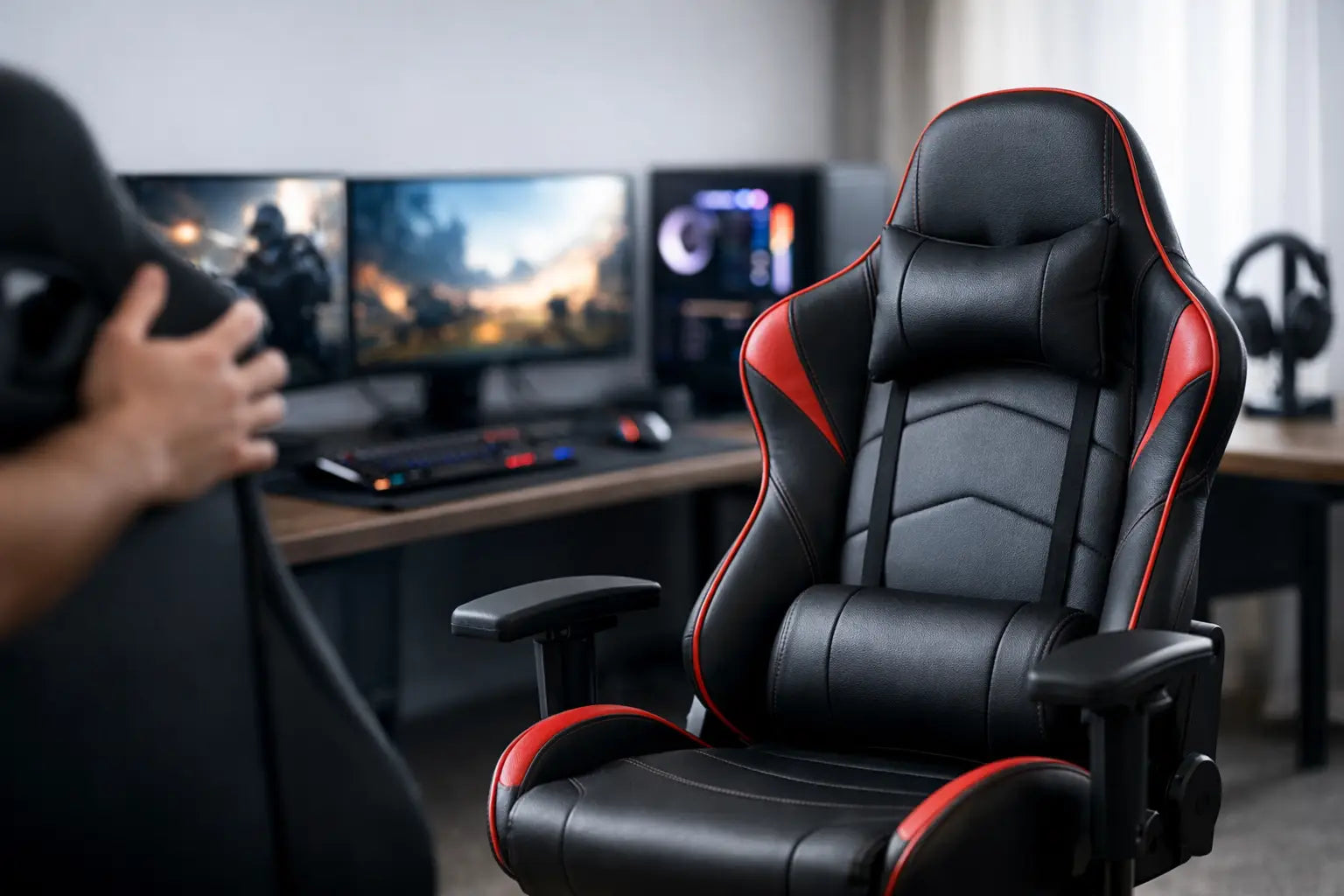
How to Choose Gaming Chair the Right Way
A gaming chair can look incredible in product photos and still feel wrong after two long sessions. That is the part many shoppers find out too late. If you are wondering how to choose gaming chair options that actually improve your setup, the real answer starts with fit, not flashy styling.
The best chair for your space is the one that supports your body, matches how you sit, and keeps you comfortable through work, gaming, streaming, or late-night races. Premium features matter, but only when they line up with your height, weight, desk setup, and the number of hours you actually spend seated.
How to choose gaming chair based on your setup
Before you compare upholstery, recline angles, or branding, look at where the chair will live. A compact bedroom desk, a full battlestation, and a racing simulator rig all create different needs.
If your desk is fixed and relatively high, seat height range becomes a big deal. If you use armrests while typing, they need to slide low enough to tuck under the desk and adjust high enough to support your elbows without shrugging your shoulders. If you play on a monitor one day and a TV the next, a deep recline may matter more than it would in a strict desk-only environment.
Flooring matters too. Wheels that glide nicely on a hard surface can feel different on carpet, and chair movement changes the overall feel of your setup. A heavy-duty gaming chair can feel planted and premium, but in a tighter room it may also feel bulky. That trade-off is worth thinking through before you buy.
Start with body fit, not marketing
This is the biggest mistake people make. They shop by aesthetic first and dimensions second. A chair that is too wide, too narrow, too tall, or too shallow will never feel premium for long, no matter how advanced the feature list looks.
Seat width should give you enough room to sit naturally without pressure on your hips or thighs. Seat depth should let your back rest against the backrest while leaving a little space behind your knees. If the seat is too deep, you may end up slouching forward. If it is too shallow, your legs may not feel supported.
Backrest height matters just as much. Taller users need shoulder and head support in the right place, while shorter users often struggle with oversized chairs that push the lumbar area too high. Weight capacity is not just about whether the chair can technically hold you. Higher-capacity models usually have wider frames, firmer padding, and sturdier bases, which can change the overall feel significantly.
What good ergonomics actually look like
If you spend serious time at your desk, ergonomics is where long-term value shows up. A gaming chair should help you maintain a more natural seated posture without forcing you into one rigid position all day.
Look for adjustable lumbar support or a lumbar cushion that can be positioned where your lower back actually needs it. Built-in lumbar systems tend to feel more refined, but some people still prefer a removable cushion because it is easier to tweak. Neither option is automatically better. It depends on how precise you want the support to be.
A headrest is useful, especially for reclined play, controller gaming, or content watching, but it should not shove your head forward when you are sitting upright. Armrests matter more than many buyers expect. Ideally, they adjust in multiple directions so your forearms can rest comfortably whether you are typing, using a controller, or leaning into competitive play.
Recline is another feature that sounds simple but has real trade-offs. More recline can feel luxurious, especially if your chair doubles as a media seat, but the rest of the structure still needs to feel stable. A chair with a huge recline range is not automatically better than one with smarter support in the upright positions you use most.
Materials change the ownership experience
When people compare gaming chairs, they often focus on appearance. Material choice has a much bigger impact on day-to-day comfort, maintenance, and how the chair ages.
PU leather or similar synthetic upholstery delivers that sleek, performance-driven look many gamers want. It is usually easier to wipe clean and often gives the chair a sharper visual edge. The trade-off is heat. In warmer rooms or longer sessions, some synthetic surfaces can feel less breathable than fabric or mesh.
Fabric chairs tend to feel softer and cooler over time. They can be a great fit for buyers who prioritize comfort and use their chair for mixed work-and-play sessions. The downside is maintenance. Fabric can be a little less forgiving when it comes to spills, dust, or pet hair.
Mesh is less common in traditional gaming-chair silhouettes, but it is excellent for airflow. If you run warm or use your setup for long workdays in addition to gaming, breathable materials deserve a close look. Style-wise, mesh often feels more office-performance than esports-inspired, so this comes down to your priorities.
Cushioning and frame quality matter more than you think
A chair can feel amazing for the first ten minutes because it is heavily padded. That does not always translate to lasting comfort. Ultra-soft foam may compress faster and provide less support during longer sessions.
Higher-density foam tends to hold its shape better and feels more supportive over time. Some users love a plush first impression, while others prefer a firmer seat that stays consistent. If you sit for long periods, long-term support usually wins.
Frame construction is equally important. Steel frames and strong aluminum or reinforced bases generally inspire more confidence than lightweight builds that prioritize appearance over durability. The same goes for the gas lift, casters, and tilt mechanism. These parts do not make the hero image, but they absolutely shape how premium the chair feels after months of use.
How to choose gaming chair features without overpaying
The smartest buy is not the chair with the longest feature list. It is the chair with features you will genuinely use.
If you mostly play at a desk with keyboard and mouse, adjustable armrests, lumbar support, and stable upright positioning should rank above extreme recline. If you game with a controller, stream content, or want a chair that works for relaxing between sessions, recline and head support may deserve more weight.
Some buyers want a racing-style seat because the aesthetic completes the room. Others would be better served by a more understated ergonomic design with gaming-friendly performance. There is no wrong answer there. The point is to avoid paying extra for styling cues or niche functions that do not improve your actual routine.
Price should be viewed through lifespan, not just checkout total. A better-built chair can cost more upfront and still deliver stronger value if it stays comfortable and structurally solid for years.
Match the chair to the way you play
Not every gamer sits the same way, and that changes the buying decision.
Competitive PC players usually benefit from upright support, responsive armrest adjustment, and a seat that encourages consistent posture. Streamers and creators often need a chair that looks polished on camera while still staying comfortable through editing, meetings, and live sessions. Racing simulator users may prioritize a seat profile that complements the rest of the rig and supports longer, more immersive use.
Then there are hybrid users, which is a huge group. If your chair needs to handle gaming, remote work, browsing, and entertainment, versatility becomes the premium feature. In that case, balanced ergonomics often matter more than aggressive styling.
A few mistakes to avoid before you buy
The fastest way to regret a chair purchase is to treat it like decor with wheels. Looks matter, especially in a dialed-in setup, but dimensions and support decide whether you still like it six months later.
Another common mistake is ignoring desk height and armrest clearance. Even an excellent chair can be frustrating if it does not fit your workstation properly. Buyers also tend to underestimate heat buildup, especially if they live in warmer climates or spend long hours seated.
And finally, do not assume bigger means better. Oversized chairs can feel impressive, but if the proportions are wrong for your body, that extra size works against comfort instead of improving it.
A great gaming chair should make your setup feel more capable the second you sit down. Choose the one that fits your body, supports your routine, and earns its place in the room every day. That is where comfort meets performance, and where a premium upgrade actually feels worth it.