How to Choose Arcade Cabinet for Your Space
That moment when you decide your game room needs an arcade cabinet is exciting right up until you realize how many directions you can go. If you're figuring out how to choose arcade cabinet options for your home, the smartest move is not starting with looks. Start with how you actually want to play, where the cabinet will live, and what kind of ownership experience you want a year from now.
A great cabinet can become the centerpiece of a media room, basement, office, or dedicated entertainment space. The wrong one can feel oversized, underpowered, or strangely limiting after the novelty wears off. The difference usually comes down to matching the cabinet to your lifestyle, not just your nostalgia.
How to Choose Arcade Cabinet Based on Use
Before you compare specs, decide what role the cabinet will play in your setup. Some buyers want a social machine for family nights and parties. Others want a serious retro gaming station with responsive controls, a strong display, and a game library that supports long sessions. Those are not always the same product.
If your goal is casual fun, an all-in-one cabinet with a broad game lineup may be the right fit. If you care most about specific genres like fighting games, classic shooters, or trackball titles, you need to look more closely at control layout and software compatibility. A cabinet that looks fantastic but lacks the right stick, button spacing, or player configuration can miss the mark fast.
There is also the question of frequency. A machine used once a month for entertaining can get away with different priorities than a cabinet you plan to use every week. Regular use puts more importance on build quality, ergonomics, and serviceability.
Start With Space, Not Spec Sheets
Arcade cabinets are emotional purchases, but room dimensions are brutally practical. Measure the footprint, then measure the clearance around it. You need space not just for the cabinet itself, but for players to stand comfortably, move around, and access nearby furniture or walls.
Think beyond width and depth. Height matters if you're placing the unit under lower ceilings or in a room with shelving, wall décor, or sloped architecture. Doorways matter too. Plenty of people choose a cabinet and only later realize getting it into a basement or upstairs game room is the hardest part of the entire purchase.
If your room serves multiple functions, a full-size cabinet may be perfect only on paper. In a mixed-use media room or home office, a more compact upright or space-conscious design often makes better long-term sense. Bigger feels premium, but only if it fits naturally into the room.
Pick the Right Cabinet Style
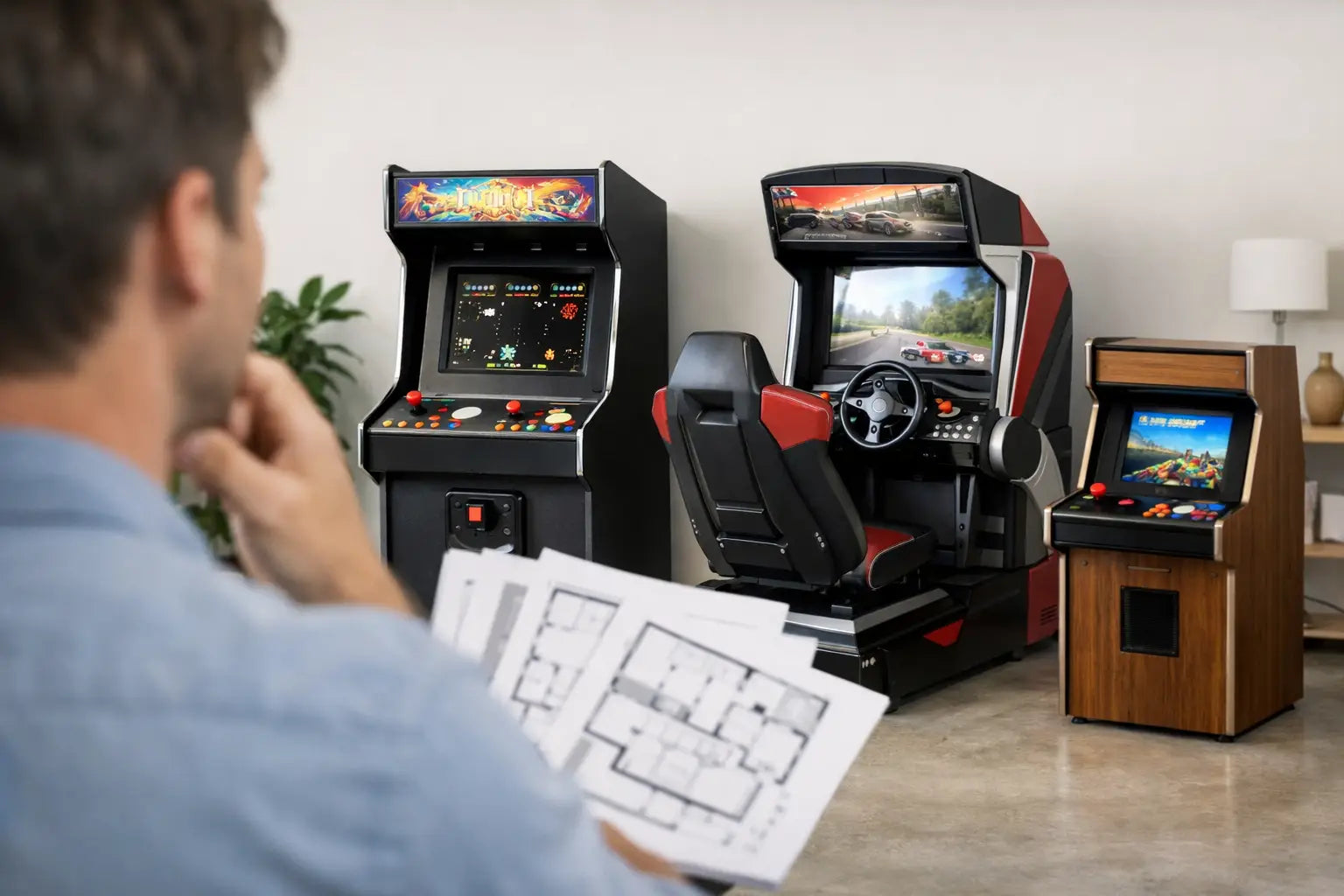
Not every arcade cabinet creates the same experience. Full-size uprights deliver the most authentic arcade presence and usually offer better visual impact. They are ideal if you want your machine to anchor the room and feel like a real destination.
Countertop and smaller form-factor units are easier to place and often make sense for apartments, offices, or tighter game rooms. They can still be a lot of fun, but they rarely offer the same physical immersion as a larger cabinet.
Cocktail tables bring a different kind of appeal. They are social, conversation-friendly, and great for certain classic titles. But they are more style-specific and less universal for modern play habits. If you mostly want competitive head-to-head sessions or upright arcade energy, a cocktail format may not be the best match.
Game Library Matters More Than Game Count
A huge game list sounds impressive, but quantity alone does not make a cabinet worth owning. What matters is whether the included library lines up with what you and your household will actually return to.
Some cabinets lean into licensed classics and recognizable arcade hits. Others pack in broad retro collections that cover many systems and genres. Ask yourself whether you want familiar favorites, variety for guests, or a focused experience around a few genres you love.
This is where buyers often overestimate their interest in endless options. A curated set of high-quality games you genuinely enjoy can be more satisfying than hundreds of titles you never touch. If multiplayer matters, check whether the game selection truly supports it rather than assuming it does.
Controls Can Make or Break the Experience
If you're serious about how to choose arcade cabinet setups that feel good to use, controls deserve close attention. This is one of the clearest differences between a machine that feels premium and one that feels like a novelty.
Look at joystick responsiveness, button layout, number of action buttons, and whether the control panel suits the genres you play most. Fighting games need a different layout than classic platformers or sports titles. Trackballs, spinners, light guns, and steering controls add a lot when they are relevant, but they are unnecessary if your preferred library does not use them.
Two-player cabinets are the default for many home buyers, and for good reason. They support social play without demanding too much room. Four-player cabinets create a bigger party feel, but they require more space and can feel excessive if most of your gaming is solo or one-on-one.
Ergonomics matter here too. Poor panel spacing, awkward height, or cramped player positions will show up quickly during longer sessions. Premium ownership is not just about specs. It is about whether the machine feels comfortable every time you walk up to it.
Display and Audio Should Feel Worth the Footprint
The screen is where the cabinet earns its place in your room. Pay attention to size, viewing angle, brightness, and how well the display supports the style of games included. A cabinet can have a great game lineup and still feel disappointing if the screen looks washed out or undersized for the body.
For shared spaces, wider viewing comfort matters because people often gather around arcade machines. If your cabinet will live in a bright room, glare and brightness become bigger factors. Audio is just as important. Good speakers add impact and atmosphere, especially for racing, action, and classic arcade soundtracks.
There is a balance to strike. Not every buyer needs the most advanced screen or loudest audio package, but if the cabinet is meant to be a showpiece, those upgrades usually pay off in daily enjoyment.
Build Quality Is a Long-Term Value Question
An arcade cabinet is furniture, gaming hardware, and décor all at once. That means build quality should be evaluated from more than one angle. Look at cabinet materials, monitor protection, control durability, finish quality, and overall stability.
If the machine will be used often, cheap-feeling buttons or a wobbly frame get old quickly. If it is going into a premium entertainment space, visual fit and finish matter just as much. A cabinet should feel substantial, not temporary.
Maintenance is part of the ownership equation too. It helps when components are accessible and replacement parts are realistic to source. Even if you are not especially technical, serviceability adds confidence to a high-value purchase.
Think About Setup and Support
Some buyers want a nearly plug-and-play experience. Others are comfortable with assembly and a bit of tinkering. Be honest about which camp you're in.
A cabinet that arrives with a simpler setup path can be the better choice for busy households or buyers who want quick results. If customization appeals to you, you may be more open to a model that asks a little more during assembly or configuration. Neither approach is better across the board. It depends on whether convenience or flexibility is the priority.
Support also matters more than people think. Responsive customer service, clear setup information, secure checkout, and dependable shipping all make a difference when you're buying a large-format entertainment product online. For many enthusiasts upgrading a room with premium tech, buying from a curated retailer like Your Tech Haven adds a layer of confidence that generic marketplaces often cannot match.
Budget for the Experience You Actually Want
Price matters, but value matters more. A lower-cost cabinet can be a smart buy if it fits your space, preferred games, and expected level of use. A more premium option makes sense when you want stronger materials, better controls, more immersive design, or a cabinet that becomes a defining feature of the room.
The key is avoiding false savings. If you buy too small, too limited, or too lightly built, you may end up replacing it sooner than expected. On the other hand, paying for features you will never use is not smart either. The sweet spot is the machine that feels right every time you turn it on.
When you know your room, your play style, and your expectations, the decision gets much easier. The best arcade cabinet is not the one with the longest feature list. It is the one that fits your space, supports the games you care about, and brings the kind of energy that makes your home entertainment setup feel complete.