Your Guide to Choosing Mobility Scooters
A mobility scooter can make the difference between planning around limitations and moving through the day on your own terms. The best choice is not necessarily the fastest model or the one with the longest published range. This guide to choosing mobility scooters focuses on the details that shape real ownership: where you ride, how you transport it, how long you sit, and what support you need to feel confident every time you head out.
Start With Your Real-World Rides
Before comparing colors, baskets, or top speeds, picture a normal week. Are you using a scooter inside a large home or senior community? Taking it through stores, museums, and paved downtown areas? Riding across a long driveway, neighborhood sidewalks, or uneven paths around a property? Your usual route should determine the scooter class.
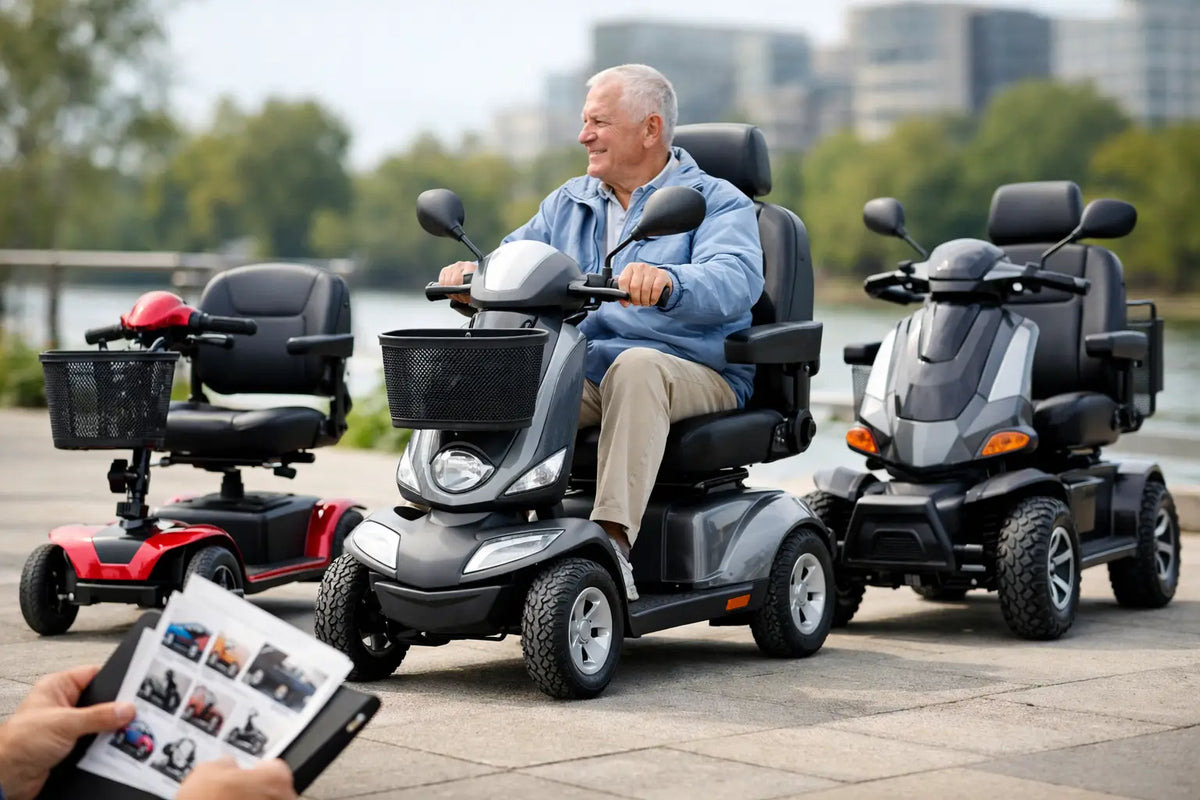
Compact three-wheel scooters are often excellent for indoor use and smooth, crowded environments. Their tighter turning radius makes them easier to position in hallways, store aisles, and elevators. The trade-off is that three-wheel designs can feel less planted on sloped ground, bumpy sidewalks, or when turning sharply at speed.
Four-wheel scooters generally deliver greater stability, especially outdoors. They are a strong match for users who want a more secure feel on uneven pavement, grass-adjacent paths, or longer neighborhood rides. They may need more room to turn, however, which matters if your home has narrow doorways or tight furniture layouts.
Heavy-duty and all-terrain models bring larger tires, stronger suspension, higher weight capacities, and more power. They can be a smart investment for rural properties, rougher surfaces, or riders who want a substantial, full-featured machine. They are also heavier, larger, and less convenient to load into a vehicle. More capability is valuable only when your environment calls for it.
Match Range to Your Day, Not the Spec Sheet
Published travel range is useful, but it is not a promise that every ride will reach that number. Rider weight, hills, tire pressure, temperature, surface conditions, battery age, and frequent starts all affect battery performance. A scooter rated for 15 miles may be ideal for quick errands and appointments, while someone who spends full days at events or enjoys long community rides may want considerably more reserve.
A practical rule is to select more range than your typical outing requires. If your planned round trip is five miles, a scooter rated at roughly that distance leaves little margin for detours, battery aging, or a route that turns out to be hillier than expected. Think of range as freedom to change plans, not just a number on a product page.
Also consider your charging routine. Most mobility scooters are designed for overnight charging, so a convenient, dry location near an outlet is part of the ownership experience. If lifting or bending is difficult, look for an accessible charging port and controls that are easy to see and operate.
Battery Type and Everyday Confidence
Many premium mobility scooters use sealed lead-acid or lithium battery systems. Lithium can reduce weight and may offer strong performance, but it is often more expensive. Sealed lead-acid batteries are common and dependable, though they can add significant weight. Rather than choosing based on battery chemistry alone, consider the complete package: range, charging convenience, replacement cost, and scooter weight.
Comfort Is a Performance Feature
A mobility scooter should support your body for the full duration of a ride, not merely get you from point A to point B. Seat width, back support, armrest position, footroom, and suspension all contribute to whether the scooter feels empowering or exhausting.
Start with the seat. A swivel seat can make transfers easier because you can turn toward the side before standing. Adjustable armrests and a sliding seat help accommodate different body types and reach preferences. If you expect to ride for more than short trips, look closely at seat padding, backrest height, and whether the seat can be adjusted without tools.
Suspension deserves attention for outdoor riders. On smooth floors and well-maintained sidewalks, it may not be a priority. On cracked pavement, long pathways, or neighborhood streets, suspension can reduce jarring movement and help make extended rides more enjoyable. Larger pneumatic tires may improve ride quality and traction, but they require periodic pressure checks. Solid tires avoid flats, though the ride can feel firmer.
Weight capacity is another non-negotiable specification. Choose a model with a capacity comfortably above the rider's weight, especially if you will use a rear bag, front basket, oxygen holder, or other accessories. Staying within the rated capacity supports stability, braking, battery performance, and the longevity of the scooter.
Portability Changes the Right Choice
If you plan to take your scooter in a car, portability may matter as much as comfort. Travel scooters are designed to fold or break down into manageable sections. This opens up more spontaneous outings, but smaller frames can mean shorter range, smaller wheels, and less luxurious seating.
Ask yourself who will load it. A disassembled scooter may have several pieces, and the heaviest component can still be difficult to lift. Check the actual weight of each section, not just the scooter's total weight. If no one can safely lift those parts, a vehicle lift or a model designed for easier transport may be the better path.
For SUV, van, or pickup owners, measure the cargo area before purchasing. Include the width of the hatch opening, the floor depth, and the height available once the scooter is inside. For vehicle lifts, confirm the lift's weight rating and compatibility with both the vehicle and scooter. A few minutes of measuring can prevent a premium purchase from becoming a garage-only solution.
Choose Controls and Safety Features You Will Actually Use
Good controls should feel intuitive from the first ride. Most scooters use a tiller-mounted console with a speed dial, direction controls, battery indicator, horn, and key. Look for clear labeling, easy-to-grip levers, and a display you can read in changing light. If hand strength or dexterity is a concern, test or carefully review the throttle style before committing.
Safety features vary by model, but a dependable scooter should have an automatic braking system that activates when the throttle is released. Anti-tip wheels, bright front lighting, reflectors, turn signals, mirrors, and a loud horn can be especially useful for outdoor use and low-light conditions. These features do not replace careful riding, but they add meaningful visibility and stability.
Know the terrain limits as well. A scooter is not a car, and it should not be treated like one. Avoid steep grades beyond the manufacturer's recommendation, deep gravel, standing water, curb drops, and roads with vehicle traffic unless local rules and the route clearly allow safe use. Learn how your model handles ramps and slopes, then take early rides slowly in a familiar area.
A Guide to Choosing Mobility Scooters by Lifestyle
The right model becomes clearer when you connect specifications to the life you want to lead. For apartment living, shopping centers, and travel, a lightweight travel scooter with a tight turning radius may deliver the most value. For daily neighborhood movement, prioritize a supportive seat, stable four-wheel base, reliable lighting, and enough range to avoid constant charging anxiety.
For larger properties and frequent outdoor use, heavier-duty construction, suspension, traction, and a higher-capacity battery usually matter more than a compact footprint. For someone balancing occasional indoor use with weekend outings, a mid-size scooter can offer the most versatile blend of stability, comfort, and manageable transport.
Accessories can make the scooter more personal and practical. A basket handles small purchases, a weather cover protects the scooter in storage, and a cane or crutch holder keeps mobility aids close without compromising balance. Choose accessories that solve an actual daily need instead of loading the scooter with unnecessary weight.
Plan for Service, Storage, and Support
A mobility scooter is a long-term lifestyle purchase, so look beyond the initial price. Review warranty coverage, replacement battery availability, and the reputation of the manufacturer. Keep the owner's manual accessible and follow the recommended maintenance schedule for charging, tire checks, cleaning, and storage.
Store the scooter in a dry, temperature-moderate area whenever possible. Extended exposure to extreme heat, cold, or moisture can affect batteries and electronic components. If you will not ride for a while, follow the manufacturer's battery storage instructions rather than simply parking it and forgetting it.
Your Tech Haven is built around helping customers bring high-performance, lifestyle-enhancing technology home with confidence. That same mindset applies here: choose the mobility scooter that fits your routines, your environment, and the independence you want to protect.
A great scooter should fade into the background of your day. It should feel ready when you want to visit friends, browse a favorite store, take in the neighborhood, or say yes to an outing that once felt inconvenient. Choose for those moments, and the right features become much easier to see.