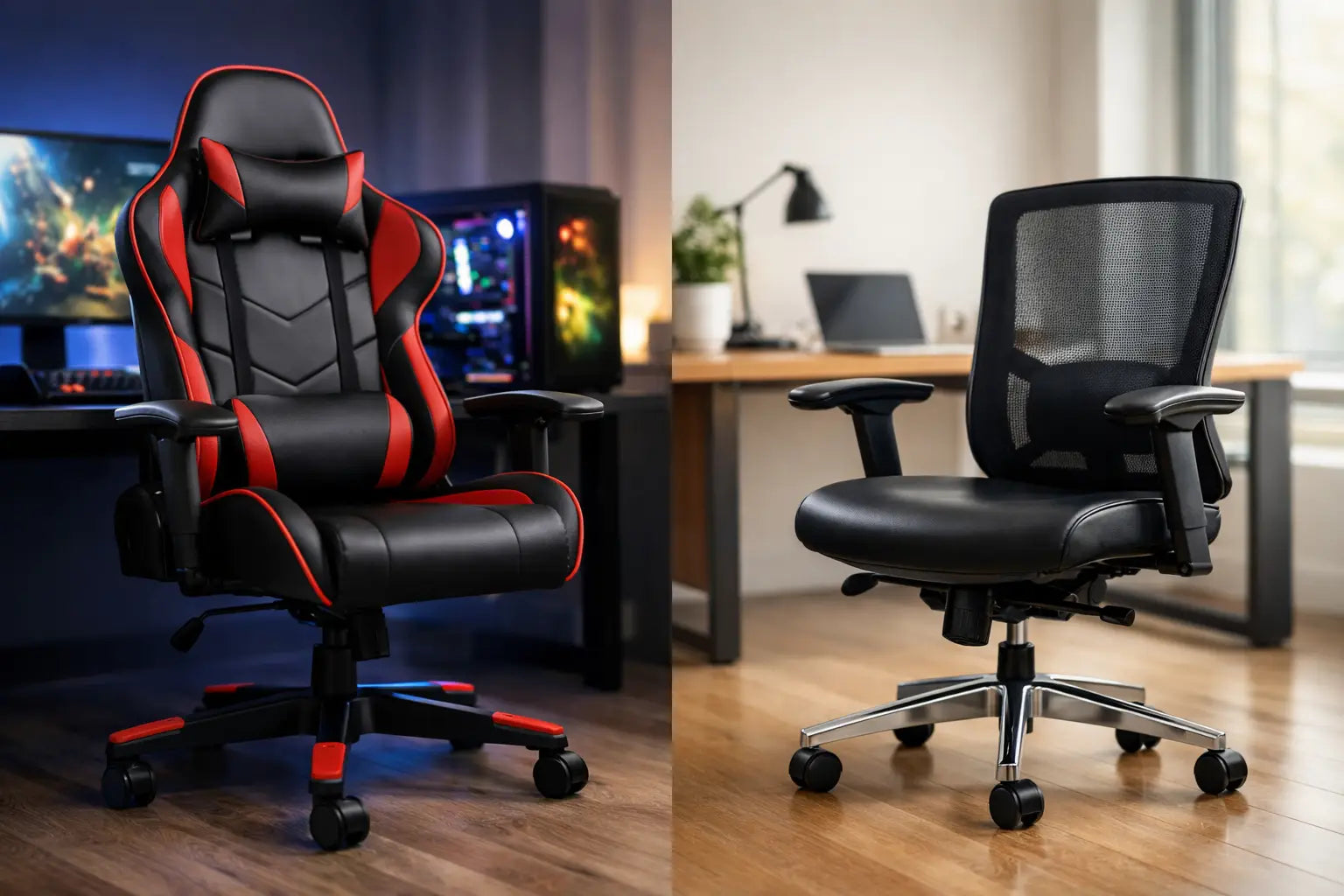
Gaming Chair vs Office Chair: Which Fits You?
You can spot the difference before you sit down. One chair looks ready for a livestream, racing sim, or late-night ranked match. The other looks built for a boardroom, a creative studio, or a serious home office. But when it comes to gaming chair vs office chair, looks only tell part of the story. The better choice depends on how long you sit, how you move during the day, and whether your setup is built more for performance, focus, or a mix of both.
For a lot of buyers, this is not a style question. It is a comfort, posture, and value question. If you are investing in a premium setup, your chair has to do more than match your desk. It needs to support your body through real use, whether that means back-to-back meetings, editing sessions, esports practice, or a full weekend at your racing rig.
Gaming chair vs office chair: the real difference
At a glance, gaming chairs and office chairs solve the same problem. They give you a place to sit for hours at a time. The difference is how they approach support.
Most gaming chairs are designed around a high-back bucket-seat shape. They often include a headrest pillow, lumbar pillow, pronounced side bolsters, and a recline that can go far beyond what you would see in a traditional office chair. The visual language comes from motorsports, which is a big reason they stand out in a game room or streaming setup.
Office chairs are usually more restrained. Their shape tends to be cleaner, flatter, and built around upright support. Instead of removable cushions and dramatic contours, many office models focus on integrated lumbar support, breathable materials, and adjustment systems meant for long workdays.
That does not automatically make one better. It means each chair category starts with a different priority. Gaming chairs often lean into immersion, style, and a more enveloping feel. Office chairs usually prioritize ergonomic flexibility and neutral posture over visual impact.
Comfort is not the same as ergonomics
This is where many shoppers get tripped up. A chair can feel soft for the first hour and still be a poor fit for daily use. It can also feel firmer at first and turn out to be the better long-term option.
Gaming chairs tend to create a more contained seating position. Some people love that. If you want a chair that feels substantial and supportive around your shoulders and sides, a well-built gaming chair can be a strong match. This is especially true for users who split time between gaming, watching content, and reclining between sessions.
The trade-off is that not every body type works well with aggressive bolsters or fixed seat shapes. If the chair is too narrow or too sculpted, it can limit natural movement. That matters more than people realize, because comfort over six hours usually comes from the ability to shift positions, not just from padding.
Office chairs often win on adaptive ergonomics. Better models make it easier to fine-tune seat height, armrest position, lumbar depth, recline tension, and seat depth. If your day includes typing, calls, spreadsheets, design work, and focused desk time, those adjustments can make a major difference.
So if your question is which chair feels more relaxed, it depends. If your question is which chair more often supports healthy posture across a long workday, office chairs generally have the edge.
What gamers should actually care about
A lot of gamers buy based on looks first. That is understandable. A chair is part of the whole setup, and the setup matters. But performance is not just frame rates and refresh rates. It is also how your neck, shoulders, and lower back feel after three hours.
For gaming, arm support matters more than many people think. If your elbows are too high, too low, or too far apart, your shoulders start doing extra work. Adjustable armrests can be valuable whether you are on mouse and keyboard or a controller. Seat height matters too, especially if you are pairing the chair with a fixed-height desk.
Gaming chairs often shine when you want a more immersive, statement-making seat that complements a battle station, sim cockpit, or media room. They also tend to appeal to buyers who want a chair that feels purpose-built for play, not borrowed from a corporate office.
But if you also work from the same desk every day, an office chair may serve you better. Many hybrid users eventually realize they do not need a chair that looks like a race seat. They need one that keeps them comfortable through work first and gaming second.
What professionals and creators should care about
If your chair supports you through editing, coding, trading, streaming, or running a business from home, your needs are slightly different. You are probably spending long stretches upright, reaching for a keyboard, and making small posture changes throughout the day.
That is where office chairs usually pull ahead. A strong ergonomic office chair supports active sitting. It lets you stay centered during focused work, lean back during calls, and adjust tension as your body changes position. Breathable mesh can also be a real advantage in warmer rooms or all-day use.
That said, not every creator wants a minimal office look. If your workspace is also your content set, your gaming room, or part of a larger entertainment zone, aesthetics matter. A premium gaming chair can make more sense in that environment, especially if it still offers quality adjustability and a size that matches your frame.
The smart move is to match the chair to the longest part of your day. Buy for the use case that takes the most hours, not the one that looks best in a photo.
Materials, build quality, and long-term value
Not all chairs in either category are created equal. A cheap office chair can feel flimsy and flat within months. A low-end gaming chair can look impressive at first and then start squeaking, compressing, or peeling far too soon.
Build quality matters more than category labels. Look at frame construction, foam density, base material, casters, upholstery, and warranty support. Premium seating should feel stable, not wobbly. Recline should be controlled, not jerky. Armrests should stay in place, not shift every time you move.
Material choice changes the ownership experience too. PU leather gives many gaming chairs that sleek, high-contrast look, and it is easy to wipe clean. The downside is heat retention and, in lower-quality versions, wear over time. Fabric can feel softer and more breathable. Mesh, common in office chairs, excels at airflow but has a different visual personality and support feel.
If you are furnishing a polished office, mesh or refined upholstery may fit better. If you are building an entertainment-first setup with bold gear and premium accessories, a gaming chair may complete the space in a way an office chair never will.
Which one should you buy?
If you want the short answer, buy an office chair if your priority is ergonomic adjustability, upright support, and all-day productivity. Buy a gaming chair if your priority is immersive styling, high-back comfort, and a seat that feels at home in a dedicated gaming setup.
The longer answer is more useful. Choose a gaming chair if you value bold design, prefer a more cradled seating feel, and spend significant time gaming, reclining, or building out a room where the chair is part of the visual experience. Choose an office chair if you work from your desk daily, need posture-friendly support for long sessions, and care more about adjustability than aesthetic flair.
If you are a hybrid user, and most people are, there is no shame in picking the more practical option. A premium office chair can still look sharp in a modern setup. And a well-designed gaming chair can still deliver strong support if the dimensions and features are right for your body.
This is also where a curated retailer matters. When you are comparing enthusiast-grade seating, you are not just buying a chair. You are investing in how your setup feels every day. That is why buyers looking for elevated gaming and workspace gear often want more than a basic furniture store experience. They want options that match performance, design, and long-term use in one place.
The best chair is the one that fits your real life
The gaming chair vs office chair debate gets framed like there has to be one winner. There is not. There is only the chair that fits your body, your habits, and the kind of space you are building.
If your setup is a place to compete, create, and unwind, treat your chair like core equipment, not an afterthought. The right pick should support your posture, match your environment, and still feel like a smart purchase months from now. Buy for the hours you actually spend, and your whole setup gets better from there.