Full Body Massage Chair Review for Home Recovery
A premium massage chair is not a novelty purchase you hide in a spare room. It is a piece of recovery technology that can become part of your daily reset, right alongside a high-performance workstation, home gym, or game room setup. This full body massage chair review focuses on what separates a genuinely useful chair from one that looks impressive on a product page but delivers a generic, short-lived experience.
For buyers investing in elevated home wellness, the right chair can provide consistent relief after long desk sessions, training days, travel, or weekends spent building, gaming, and creating. The wrong one can take up serious floor space while offering little more than vibration and a few preprogrammed movements. The difference comes down to mechanics, fit, features, and how the chair matches your routine.
What This Full Body Massage Chair Review Looks For
A full body massage chair should do more than move rollers up and down your back. At the premium level, it should create a convincing, adjustable massage experience across the areas that collect the most tension: the neck, shoulders, spine, hips, calves, and feet. It should also be easy enough to use that you will actually use it several times a week.
The strongest chairs combine a long roller track with body scanning, air compression, heat, reclining support, and targeted programs. But a long specifications list is not automatically a better experience. Some features matter every session, while others are nice additions that should not distract from core performance.
Roller Track and Massage Coverage
The roller track is the foundation. S-track designs follow the curve of the spine, which can feel natural through the lower back. L-track models extend beneath the glutes and often into the upper hamstring area, giving the chair more meaningful lower-body coverage. For most people shopping for a full body experience, an L-track is the more versatile option.
Look beyond track length alone. The chair should allow you to adjust roller width, intensity, speed, and position. A chair that can focus on the upper traps after a demanding workday is more valuable than one that only offers a broad, fixed routine. Premium models may use 3D or 4D rollers that extend farther outward from the track and vary their speed or rhythm for a more human-like feel.
That said, deeper rollers are not always better. If you are sensitive to pressure or primarily want gentle relaxation, a highly aggressive 4D chair may feel excessive. Adjustable intensity is the feature that keeps a chair useful for more people in the household.
Body Scanning Is More Than a Tech Add-On
Automatic body scanning measures your shoulder height and body contours before a session. This matters because roller placement is not one-size-fits-all. When the chair identifies your upper back accurately, kneading motions land where tension actually sits instead of pressing too high, too low, or directly onto the wrong areas.
Most quality chairs also let you fine-tune roller placement manually. That is worth having, especially if you are tall, have a shorter torso, or prefer a specific spot around the shoulder blades or lumbar region. Treat scanning as a starting point, not a replacement for personal control.
The Features That Make a Chair Feel Full Body
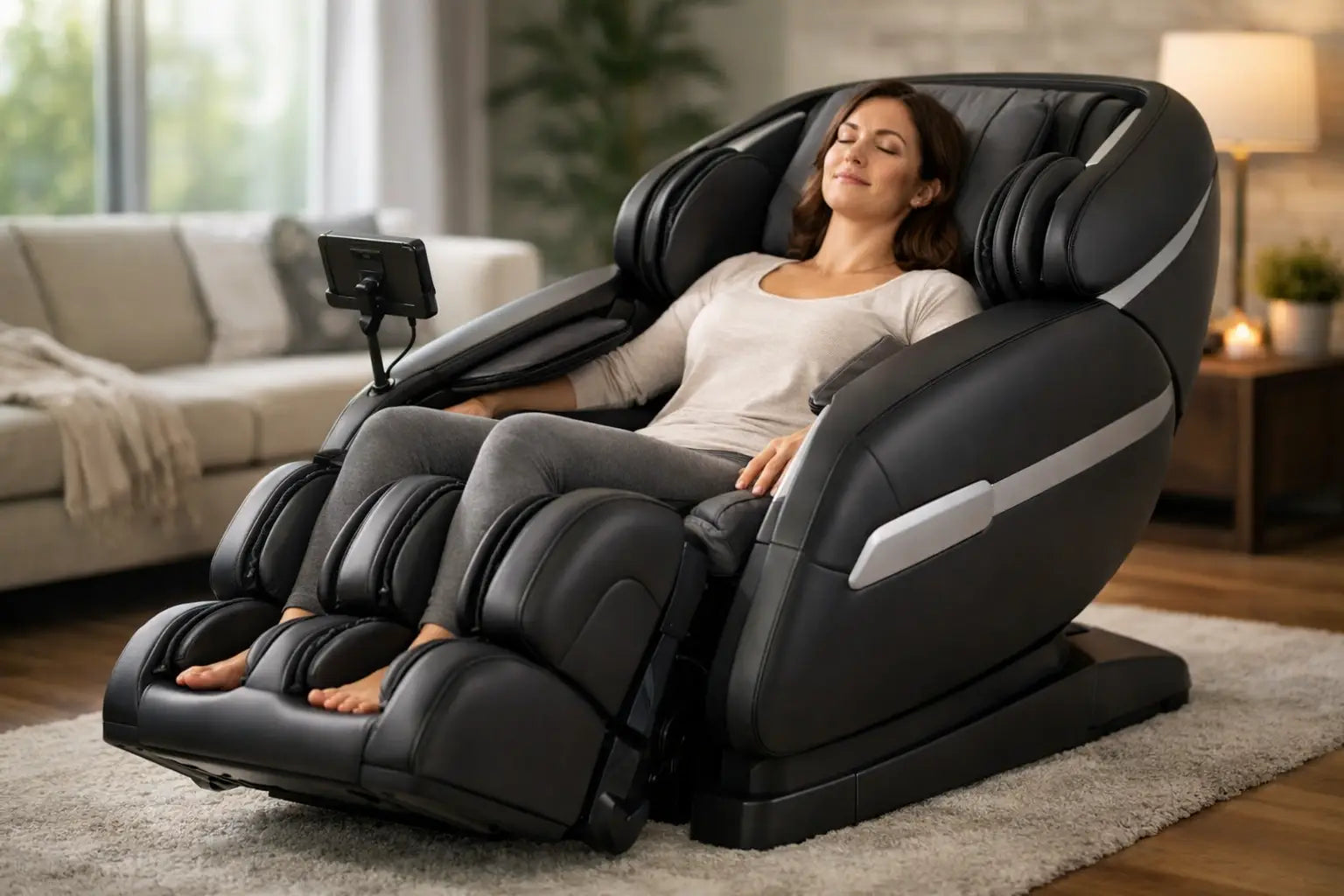
A chair earns the “full body” label through coordinated coverage, not simply through a long list of massage zones. The best sessions pair rollers with strategically placed airbags and lower-body mechanisms, creating pressure and release across the body rather than concentrating everything on the back.
Air compression around the shoulders, arms, hips, calves, and feet can be especially effective after sitting for hours. It does not feel like a deep-tissue roller massage, but it can create a satisfying stretching and circulation-focused sensation. Strong chairs let you adjust airbag intensity separately from roller intensity, which prevents the arms or calves from feeling over-squeezed.
Foot massage systems are another major differentiator. Basic chairs use airbags and simple foot rollers. More advanced models combine calf compression, ankle support, reflexology-style rollers, and calf kneading. If foot fatigue is a regular issue, this part of the chair deserves the same attention as back massage performance. A great upper-back program will not make up for cramped foot wells or weak calf coverage.
Heat is helpful, but expectations should be realistic. Many chairs provide gentle warmth rather than the high heat of a heating pad. It can make a massage feel more relaxing and help loosen up before deeper roller work, but it should be viewed as a supporting feature. If heat therapy is a primary buying reason, verify where it is delivered - lumbar, calves, feet, or multiple zones - rather than assuming it covers the entire body.
Zero Gravity and Stretching Programs
Zero gravity positioning reclines the chair so your legs sit above or near heart level, reducing pressure through the spine and helping your weight settle evenly into the seat. It is one of the features that can make a good massage feel dramatically better. The reclined position allows the rollers to maintain more consistent contact and often makes compression programs feel less restrictive.
Space-saving recline is equally practical. Traditional chairs may need significant clearance behind them, while space-saving designs slide forward as they recline. For a media room, home office, or dedicated wellness corner, that can determine whether the chair fits comfortably without rearranging the room around it.
Stretching programs use airbags to anchor parts of the body while the chair reclines or shifts position. They can feel excellent after prolonged sitting, particularly through the hips and lower back. They can also be intense. Beginners should start with a gentler program and lower compression settings rather than treating the strongest stretch routine as the default.
Size, Fit, and Room Planning Matter More Than You Think
Before comparing massage techniques, measure your space. Account for the chair’s upright footprint, reclined footprint, delivery path, and room around the sides for getting in and out. These are substantial pieces of furniture, and a chair that technically fits can still feel awkward if it blocks a doorway or crowds a gaming desk.
User height and weight ranges are just as important. Taller users should verify shoulder placement, leg extension range, and footrest length. Shorter users should confirm that the chair’s body scan and shoulder settings can adjust downward appropriately. A chair that fits one person perfectly can feel misaligned for another, even when both fall within the stated height range.
For shared households, prioritize range and adjustability over maximum intensity. Memory settings can be useful when multiple people want different recline positions, massage strengths, or favorite programs. Voice control, touchscreen remotes, Bluetooth speakers, and app controls can be convenient, but they should not outweigh fit and massage mechanics.
How to Read a Full Body Massage Chair Review
When comparing chairs, pay close attention to reviews that explain who the chair suits and how it performs after repeated use. A review saying “it feels amazing” is encouraging, but it tells you little about roller depth, calf comfort, shoulder fit, noise level, or controls.
Useful reviews tend to address whether the chair runs gentle or intense, whether the foot rollers feel effective, whether the airbags create comfortable compression, and whether the automatic programs are customizable. They also mention setup realities. Premium massage chairs can be heavy, may arrive in multiple boxes, and often need thoughtful placement before delivery day.
Be cautious with claims that imply a massage chair can diagnose, treat, or cure medical conditions. A chair can support relaxation, post-workout recovery, and everyday comfort, but it is not a substitute for professional medical guidance. People with injuries, circulation concerns, implanted devices, pregnancy, or other health considerations should check with a qualified clinician before use.
Who Gets the Most Value From One?
A full body massage chair makes the most sense for people who value frequent, on-demand recovery and can dedicate space to it. It is especially compelling for remote professionals, active adults, gamers who spend long hours seated, and households that want a high-end wellness feature without scheduling regular appointments.
It may be less compelling if you only want an occasional light massage, have limited floor space, or prefer the precise hands-on work of a massage therapist. There is no single chair that replaces every kind of massage. What it offers instead is consistency: the ability to recline, target the tension you feel right now, and reset on your own schedule.
At Your Tech Haven, the best approach is to shop with your routine in mind, not just the feature list in front of you. Choose the chair that fits your body, your room, and the kind of recovery you will genuinely make time for. The most advanced home wellness upgrade is the one that earns its place in your everyday life.