Drone Camera Comparison for Better Buying
A premium drone can turn a weekend ride, a real estate shoot, or a creator project into footage with real perspective. But a drone camera comparison should start with more than the biggest video resolution on the box. The best choice is the one that gives you the image quality, flight confidence, and creative control you will actually use.
For many buyers, the decision comes down to three questions: How polished should the footage look? Where and how often will you fly? And do you want a compact tool that travels everywhere or a larger platform built for serious production work? Once you answer those, the spec sheet becomes far easier to read.
Drone Camera Comparison: Start With the Sensor
Camera resolution gets attention, but sensor size has a bigger effect on the character of your footage. A larger sensor collects more light, which generally means cleaner low-light video, better detail in shadows, and more flexibility when editing. That matters when you are shooting sunrise landscapes, evening events, or cinematic scenes with bright skies and darker ground detail.
A 1/2.3-inch or similarly small sensor can still produce excellent social-ready footage in good daylight. These drones are often lighter, more portable, and more approachable for new pilots. They make sense for travel clips, family adventures, casual aerial photography, and creators who want a capable camera without carrying a large gear bag.
Move up to a 1-inch sensor, Micro Four Thirds system, or another larger-format camera, and you are buying more than pixels. You gain a stronger foundation for color grading, print-worthy stills, and challenging lighting conditions. The trade-off is usually cost, larger aircraft size, and a more involved workflow. For a creator producing branded content or a professional capturing commercial imagery, that added flexibility can be worth every bit of it.
Resolution still matters, especially for reframing. A drone that records in 4K gives most enthusiasts plenty of detail for YouTube, social media, and viewing on modern TVs. Higher-resolution capture can be useful when you need to crop into a shot while retaining a 4K final export. Just remember that high-resolution footage demands more storage, faster memory cards, and a computer that can handle editing without slowing your creative process.
Look Beyond 4K
Frame rate changes what you can create. Standard 24 or 30 frames per second works well for cinematic sequences and general video. Recording at 60 fps provides smoother action and allows modest slow motion. Higher frame rates are ideal for fast sports, water scenes, vehicles, and dramatic motion shots, though they may come with lower resolution or a crop factor.
Also check for a true mechanical shutter if aerial photography is a priority. It helps reduce rolling-shutter distortion when shooting stills while moving, particularly in mapping, real estate, and detailed landscape work. Adjustable aperture, flat color profiles, HDR capture, and 10-bit color are equally valuable upgrades for shooters who want control in post-production rather than relying on a finished look straight from the drone.
Choose a Drone for How You Actually Fly
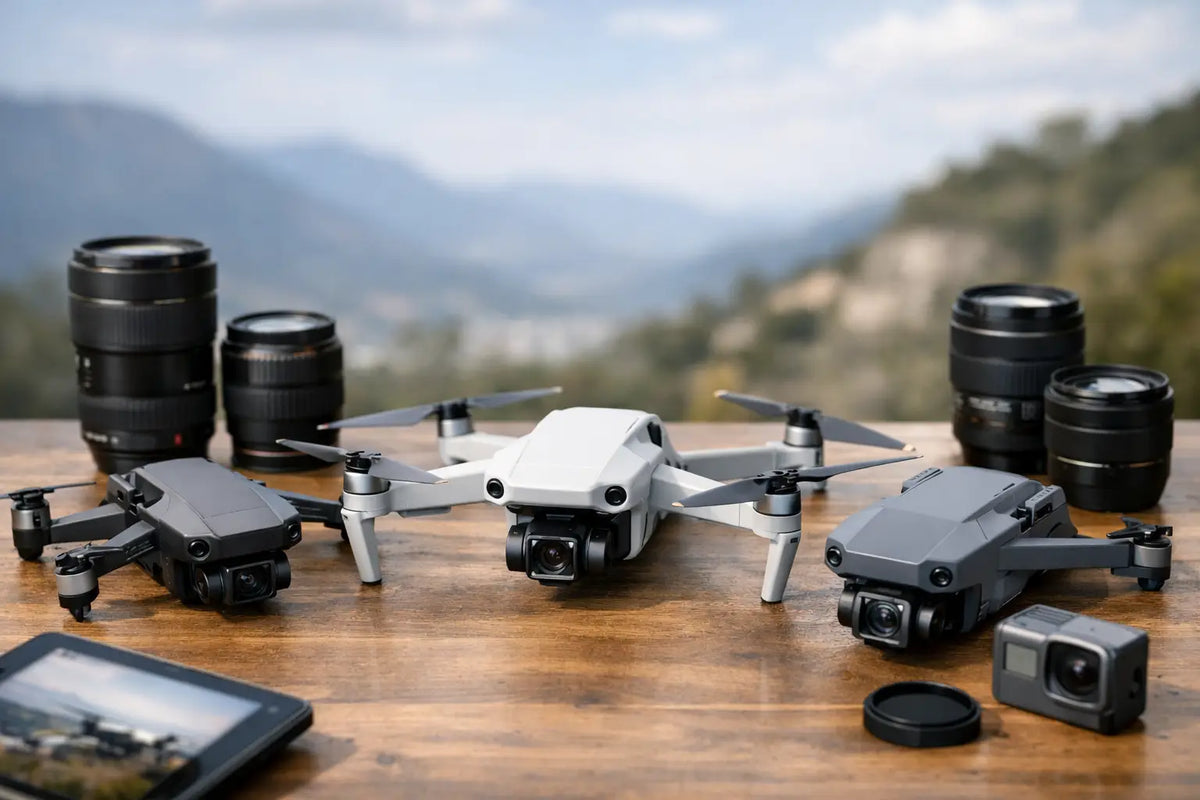
The smallest drone is not automatically the beginner choice, and the biggest drone is not automatically the professional choice. Portability often decides whether a drone becomes part of your routine. A foldable, lightweight model that fits beside your camera or laptop can be the better investment if you travel often, hike, or want to capture spontaneous moments.
Compact drones typically launch quickly, pack easily, and feel less intimidating in open locations. Their limitations may include less wind resistance, a smaller sensor, and fewer advanced camera settings. Those compromises are acceptable for many buyers. A drone you take with you will create more opportunities than a larger model left at home.
Larger camera drones are designed for demanding conditions and more deliberate productions. They usually offer better stability in wind, longer flight times, stronger obstacle sensing, and more sophisticated imaging systems. If you are filming property exteriors, outdoor products, action sequences, or destination content, the added confidence can transform the experience. Stable footage begins with a stable aircraft.
Weight also carries practical considerations in the United States. Registration, operating rules, and Remote ID requirements can apply depending on the aircraft and how you fly. Check current FAA guidance before each type of use, especially if your work involves commercial content. Safe flying is part of premium ownership, not an afterthought.
Flight Time Is Really Shooting Time
A listed flight time is measured in favorable conditions, not in the stop-start rhythm of a real shoot. Wind, cold temperatures, aggressive movement, and return-to-home reserves all reduce usable airtime. If a model claims 30 to 40 minutes, plan your creative sessions around less than that.
For quick travel clips, one or two batteries may be enough. For a property shoot, a day outside, or a content production with multiple locations, extra batteries are one of the most practical upgrades you can make. They give you time to reset a composition, wait for better light, or capture a second take instead of rushing a shot.
Battery charging matters, too. A multi-battery charging hub can keep a longer day organized, while USB-C charging may make travel simpler. Consider the entire system: aircraft, controller, spare batteries, charger, case, propellers, and storage cards. The drone is the centerpiece, but the accessory setup determines how ready you are when the view is perfect.
Safety Features Make Better Footage Possible
Obstacle sensing is not a substitute for pilot awareness, but it can reduce stress and protect a major investment. Sensors that cover the front, rear, sides, top, and bottom give the drone more awareness when you are tracking a subject or flying through complex environments. This is particularly helpful for newer pilots and for creators concentrating on framing while maintaining a safe, legal flight path.
GPS positioning, return-to-home functionality, reliable transmission range, and strong wind resistance deserve equal attention in a drone camera comparison. They are not flashy camera specs, yet they affect whether your aircraft holds position cleanly and returns predictably when conditions change.
Intelligent flight modes can also add value. Subject tracking, waypoint routes, orbit shots, and automated reveal moves help create dynamic footage without needing advanced stick skills. Use them as creative tools, not as permission to stop watching your surroundings. Trees, power lines, people, and changing weather still require a pilot who is fully engaged.
The Best Camera Setup Depends on Your Goal
A travel creator may get the most value from a compact drone with 4K video, dependable stabilization, vertical capture, and a simple controller. Fast setup and portability will matter more than a large sensor on most trips.
A real estate professional should prioritize stable hover performance, a wide but natural-looking lens, high-resolution stills, and enough battery capacity to cover a property efficiently. An adjustable aperture and larger sensor can be especially useful for balancing bright exteriors with shadowed landscaping.
For cinematic creators, image flexibility rises to the top. Look for a larger sensor, 10-bit color, log recording, high frame rates, and support for filters that let you control shutter speed in bright conditions. Those features create more room to shape the final look during editing.
Action-focused pilots should weigh tracking performance, obstacle sensing, fast acceleration, and wind resistance alongside camera specifications. A stunning sensor will not help much if the aircraft cannot hold a reliable tracking shot in the environment where you work.
Buy for the Next Level, Not Just the First Flight
It is smart to choose a drone that feels exciting on day one, but consider where your skills and projects may go over the next year. A first-time pilot does not always need the most advanced aircraft. Still, buying too far below your ambitions can lead to an early upgrade when you discover you want better low-light performance, more manual control, or safer automated tracking.
Set your budget around the full flying kit rather than the aircraft alone. Add spare batteries, a quality carrying case, compatible memory cards, replacement propellers, and any filters or controller accessories that support your style of shooting. This approach protects your investment and makes the experience more enjoyable from the first launch.
The right drone camera is the one that invites you to fly more, shoot with confidence, and bring home footage worth sharing. Whether you are building a creator setup or adding a new perspective to your next adventure, Your Tech Haven can help make that upgrade feel future-ready.