Home Game Tables Buying Guide for Better Play
A great game table changes the way a room gets used. It turns an unfinished basement into a destination, gives family nights a reason to run late, and makes a home theater or gaming setup feel complete. This home game tables buying guide is built for buyers who want more than a novelty purchase: you want equipment that looks right, plays right, and earns its floor space for years.
The best choice is rarely the table with the most games packed into one cabinet. It is the one that fits how you actually entertain, the room you have available, and the level of performance you expect. Start there, and the specifications become much easier to sort out.
Start With the Game You Will Play Most
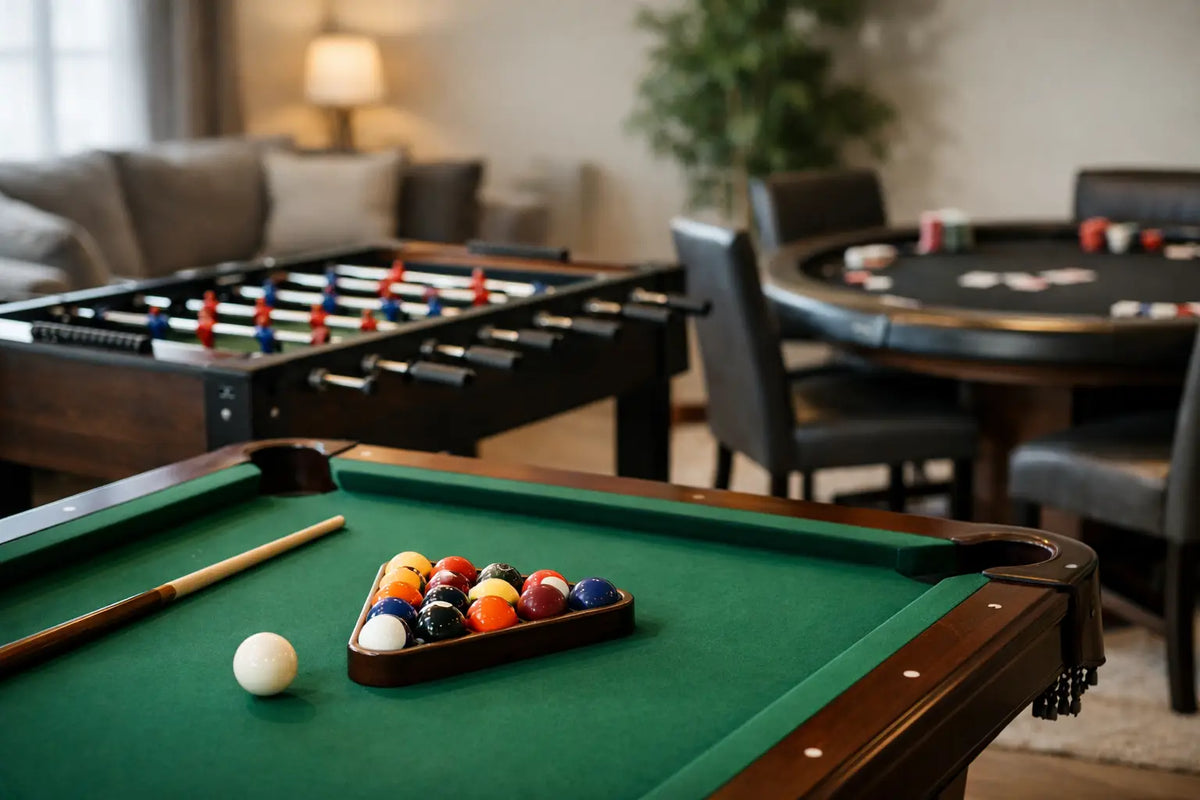
Before comparing finishes, LED lighting, or accessory bundles, identify the game that will get the most use. A dedicated pool table rewards serious players with a true roll and a more stable frame. An air hockey table brings fast, high-energy competition to a family room. Foosball is compact, social, and easy to jump into between other activities. Shuffleboard delivers a more refined, lounge-style experience that works especially well in adult entertainment spaces.
Multi-game tables make sense when space is limited or when you are furnishing a room for a wide range of ages. They can offer pool, table tennis, air hockey, and more in one footprint. The trade-off is setup time, storage for conversion tops, and sometimes a lighter playing surface than a purpose-built table. For occasional play, that compromise can be smart. For a household of devoted players, a dedicated table is usually the better long-term investment.
Think about your audience, too. A household with younger kids may get more value from an air hockey or foosball table with durable, forgiving construction. A game room designed around weekly gatherings may call for pool, shuffleboard, or a tournament-style arcade table that can anchor the room.
Measure the Room, Then Measure the Play Zone
A table that technically fits can still make a room frustrating to use. The table itself is only one part of the footprint. Players need clearance to stand, move, and use equipment comfortably.
For pool, cue length makes room planning especially important. A standard 8-foot pool table typically needs a room around 13 feet 6 inches by 17 feet for full-size cues. A 7-foot table can be a better fit for a tighter game room while still delivering a satisfying, bar-style experience. If your room falls short, shorter cues can help, but they are a compromise rather than a complete solution.
Shuffleboard needs runway at both ends, while air hockey and foosball need enough perimeter space for players to lean in and move naturally. Do not forget door swings, walkways, seating, media consoles, and the location of outlets. In a multipurpose room, leave a clear path so the table feels integrated rather than dropped into the middle of traffic.
Ceiling height matters for rooms with pendant lights, ceiling fans, or a planned racing simulator nearby. Keep lighting above a pool or ping-pong table high enough to avoid visual glare and accidental contact during play. A simple tape outline on the floor is one of the most useful planning tools you can use before ordering.
Choose a Build Quality That Matches Your Expectations
Game tables span a wide range of price points because their construction varies dramatically. For premium home entertainment, the underlying structure matters more than decorative details.
Pool tables: slate, frame, and rails
Slate is the benchmark playing surface for pool because it is flat, stable, and built to last. One-piece slate is extremely solid but difficult to move. Three-piece slate is common in quality home tables because installers can level it precisely after delivery. MDF or other composite-bed tables cost less and can work for casual play, but they are more vulnerable to humidity and generally do not offer the same consistency.
Look for a strong cabinet, dependable leg levelers, and responsive rails. Solid wood, hardwood veneers, and reinforced internal frames add durability and help the table remain level. Felt quality also affects speed and control, although it can be upgraded later if the table itself is worth keeping.
Air hockey: airflow is everything
A powerful, evenly distributed blower is what separates a real air hockey experience from a table that feels slow after a few rounds. Check the playfield for a dense pattern of air holes and look for a rigid cabinet that will not flex under energetic play. Commercial-inspired tables are often louder, heavier, and more expensive, but they provide the fast puck action enthusiasts expect.
Electronic scoreboards, sound effects, and lighting can add excitement, especially for a family game room. Prioritize reliable gameplay first. A responsive surface will outlast the thrill of any feature set.
Foosball and shuffleboard: weight creates confidence
On a foosball table, cabinet weight, rod quality, bearing smoothness, and player balance shape every match. Hollow steel rods move quickly, while solid rods can feel more substantial. Counterbalanced players are a strong upgrade for competitive play because they stay in position when you release the handle.
For shuffleboard, seek a thick, well-finished playing surface and sturdy cabinet construction. Climate adjusters are valuable in many regions because wood can react to changing temperature and humidity. A level, properly maintained table gives the puck a clean, predictable glide.
Match the Table to Your Room's Design
A game table is major furniture. Treat it that way. Contemporary black finishes, metal legs, and clean lines pair naturally with gaming PCs, racing rigs, large displays, and modern audio systems. Warm wood finishes can make a recreation room feel more like a private club or a polished home lounge.
Consider the table from every angle, not only the product photo. Pool tables and shuffleboards are visible from across the room. Their leg design, cabinet depth, and finish should complement the flooring, seating, and wall color. In a dedicated entertainment space, coordinated lighting and a few well-placed stools can make the setup feel intentional without crowding the play area.
This is also where multipurpose planning pays off. A dining-top conversion for a pool table can be practical in a large open-concept room. A folding table tennis option may be ideal when you need the floor open for workouts, VR gaming, or maker projects. The right design is the one that supports the room's primary job rather than fighting it.
Plan for Delivery, Assembly, and Long-Term Care
Premium game tables are heavy, oversized, and not always simple to assemble. Confirm the route from curb to room before purchase. Measure doorways, stairwells, turns, elevators, and basement access. A table may fit beautifully in its final location but be impossible to carry there in one piece.
Professional installation is particularly worthwhile for slate pool tables and long shuffleboards. Accurate leveling is essential to play quality, and trying to rush it can create problems that are difficult to correct later. For air hockey and foosball, assembly is often more manageable, but a second person is still helpful for lifting and aligning large components.
Protect your investment with habits that take very little effort. Use a fitted cover for pool and shuffleboard tables, keep drinks on nearby side tables, and check levelers periodically. Clean air hockey surfaces with the manufacturer-approved method so dust does not reduce airflow. For wood finishes, avoid prolonged direct sunlight and extreme humidity swings.
Set a Budget Around the Experience, Not Just the Sticker Price
Your budget should include the table, delivery, installation when needed, accessories, and the room improvements that help it perform. Quality cues, balls, paddles, pucks, lighting, and protective covers all make a tangible difference. A less expensive table with poor accessories can feel underwhelming from day one.
There is no single "right" spend. A casual buyer may be happiest with a durable multi-game table that keeps the family active. A pool player who knows they will practice every week should put more of the budget toward slate, rail quality, and professional setup. If you are building a complete tech-forward entertainment room, choosing fewer, better pieces often creates a stronger result than filling every open corner.
At Your Tech Haven, the goal is to help make that decision feel exciting instead of overwhelming. Choose the game that brings people together, give it enough room to shine, and invest in the construction that matches your ambition. The right table will not just complete the room. It will give everyone a reason to come back to it.