Desktop Resin Printer Review Guide
If you have ever watched a resin printer pull a fully detailed miniature, dental model, or product prototype out of a vat, you already know why the desktop resin printer review category gets so much attention. Few maker tools feel this futuristic at home. The catch is that resin printing rewards the buyer who looks past headline specs and pays attention to workflow, cleanup, and real-world reliability.
That is where a useful review should start. Not with hype, and not with a race to the cheapest machine. A desktop resin printer can deliver stunning surface finish and fine detail that most filament printers simply cannot match, but the best choice depends on what you plan to make, how often you print, and how much post-processing you are willing to handle.
What a desktop resin printer review should actually measure
A strong desktop resin printer review is not just a checklist of resolution numbers. On paper, many machines look similar. In practice, the ownership experience can be very different.
Print quality is the headline feature, and resin still leads here for small, intricate parts. Miniatures, jewelry masters, collectible figures, tabletop terrain accessories, and precision display pieces all benefit from the smoother surfaces and sharper edges that resin can produce. Fine text, tiny supports, and facial features tend to come out cleaner than they would on most consumer FDM systems.
But quality is only one piece of the decision. Speed matters too, although resin printer speed can be misunderstood. Layer exposure times, lift settings, and build plate area all influence output. A machine that prints one highly detailed part beautifully may not be the fastest option for batch production. If you want to fill the plate with parts for small-run prototyping or repeat hobby production, throughput becomes more important than the spec sheet alone suggests.
Reliability is another factor that separates premium desktop machines from frustrating budget options. A printer that requires frequent re-leveling, inconsistent vat performance, or constant troubleshooting can erase any upfront savings quickly. For enthusiasts investing in a serious home workshop, consistency is part of the premium experience.
Desktop resin printer review: the specs that matter most
Resolution is usually the first thing buyers compare, and for good reason. Higher screen resolution and smaller pixel size generally help produce sharper details. Still, this is one of those it-depends areas. If you print medium-size garage kit pieces or engineering mockups, the difference between good and excellent resolution may be less important than build volume and dependable exposure performance.
Light source quality deserves just as much attention. A well-designed UV system helps maintain even curing across the plate. Uneven exposure can create subtle quality issues that are hard to diagnose at first, especially for new users who assume failed prints are always a support problem.
Build volume also changes the type of machine you are buying. A compact resin printer is often ideal for miniatures, dental work, and detailed hobby parts. A larger desktop unit opens up helmets, bigger statues, larger prototypes, and higher batch capacity, but it also brings more resin use, bigger cleanup sessions, and a greater penalty when a full plate fails.
User interface matters more than many reviews admit. A clear touchscreen, intuitive file prep, easy vat access, and straightforward leveling can make the difference between a machine you use every weekend and one that sits idle after the first few attempts. Convenience is a feature, especially for buyers who value premium gear that fits smoothly into a busy home setup.
Print quality vs convenience
This is the central trade-off in almost every desktop resin printer review. Resin wins on detail, but it asks more from you.
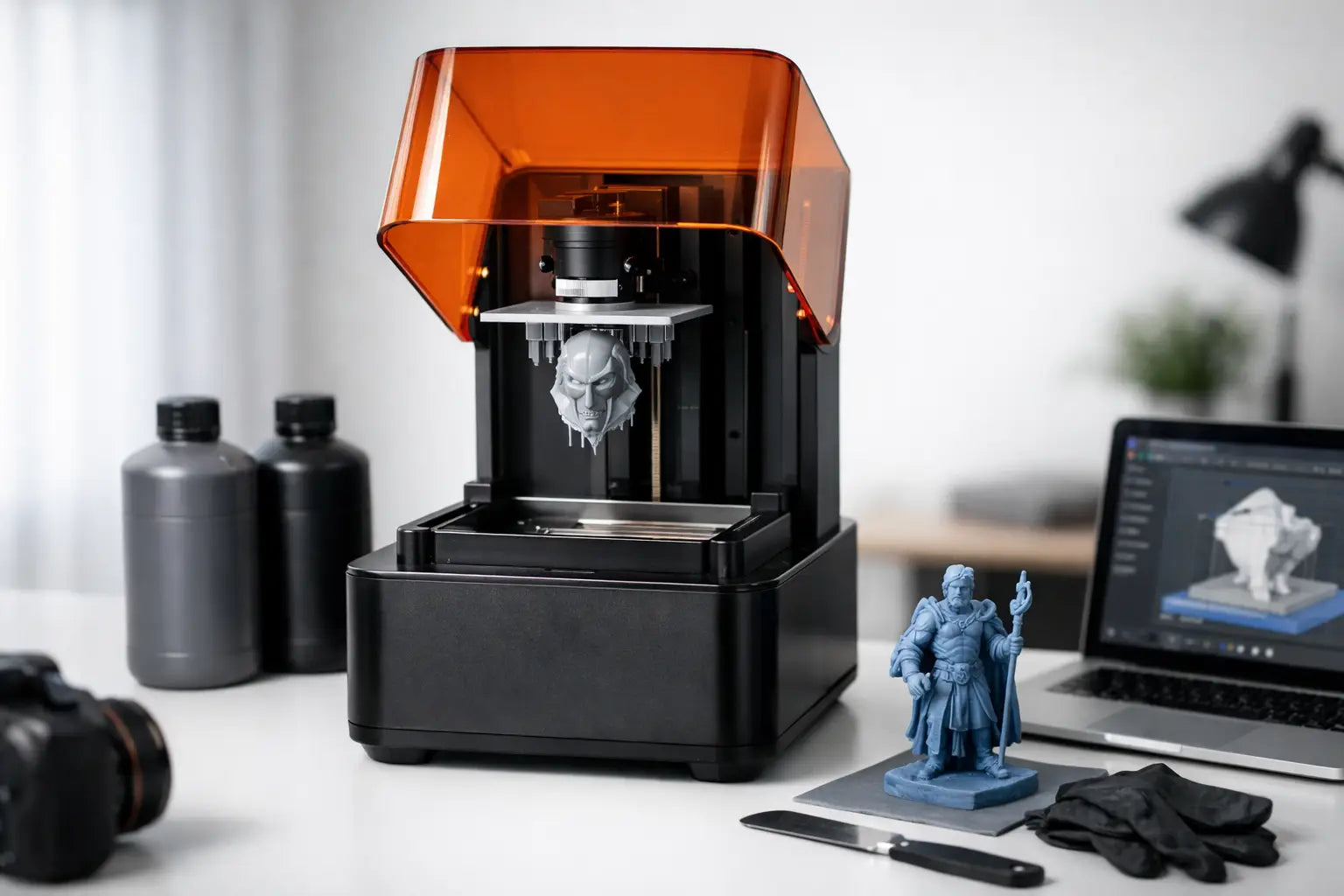
You are not just pressing print and walking away forever. You are handling liquid resin, wearing gloves, washing parts, curing them properly, and managing odors and waste with care. For many makers, that is a fair trade because the results are exceptional. For others, especially people expecting appliance-level simplicity, the process can feel more involved than anticipated.
That does not mean resin printing is difficult. It means it is procedural. Once your setup is dialed in, the routine becomes second nature. A wash-and-cure station, good ventilation, organized tools, and a designated work surface turn resin printing from messy experiment into a polished workflow.
This is why the best desktop resin printer is rarely just the one with the sharpest output. It is the one that matches your tolerance for maintenance and your expectations for convenience.
Who should buy a desktop resin printer
If your priority is visual detail, resin makes a strong case. Tabletop gamers printing miniatures, creators producing figurines, designers prototyping small consumer products, and collectors building display models are the natural audience. Professionals in dental, jewelry, and specialty modeling spaces also benefit from the precision and finish quality.
If you mainly want large functional parts, brackets, workshop tools, or rough prototypes, filament printing may still be the more practical route. Resin can produce accurate parts, but the material handling and post-processing overhead are harder to justify when detail is not the main goal.
For many advanced hobbyists, the smartest setup is actually both: a resin printer for high-detail work and an FDM machine for larger utility parts. That combination covers a huge creative range and makes a home maker space feel truly future-ready.
Common buying mistakes in a desktop resin printer review
One of the biggest mistakes is buying only by price. Entry-level machines have improved dramatically, but the cheapest option can still cost more in failed prints, weak software, poor support, and inconsistent components. If you are building a reliable creative setup at home, value should include the full ownership experience.
Another mistake is underestimating accessories. The printer is only part of the system. You may also need resin, replacement film or vat consumables, cleaning solution, curing equipment, filters, gloves, scrapers, storage bottles, and protective mats. Buyers who budget only for the printer often end up surprised by the real startup cost.
Ventilation is another area where excitement can outrun planning. Even compact desktop units need a sensible printing environment. A dedicated workstation, garage bench, utility room, or other controlled space is far better than treating resin printing like a casual kitchen-counter gadget.
Finally, some shoppers buy too much build volume too soon. Bigger sounds better, but larger resin printers use more material and can make every failed print more expensive. If your core work is miniatures or small design pieces, a mid-size machine may be the smarter long-term purchase.
What premium buyers should look for
For buyers shopping beyond entry-level gear, refinement matters. Look for sturdy construction, dependable screen performance, easy maintenance access, and software that does not feel like an afterthought. These qualities may not sound glamorous, but they are what make a machine feel worth owning month after month.
Brand ecosystem matters too. Consumable availability, replacement parts, and practical support can shape your experience just as much as print specs. When you invest in enthusiast-grade equipment, you want confidence that the machine can stay productive instead of becoming disposable.
This is also where curated retailers earn their place. A good product mix saves you from sorting through random options with inflated claims. For customers already investing in a better home workshop, creative studio, or tech-forward hobby setup, that guidance has real value.
Is a desktop resin printer worth it?
For the right user, absolutely. A well-chosen resin printer can elevate what you make at home in a way that still feels impressive every time the build plate rises. The level of detail, polish, and professional-looking output is hard to ignore.
That said, worth depends on fit. If you want plug-and-play simplicity above all else, resin may feel demanding. If you care about precision, display-ready quality, and the satisfaction of producing advanced parts on your own desk, it is one of the most exciting upgrades you can make.
The strongest desktop resin printer review does not promise a perfect machine. It helps you choose one that fits your goals, your space, and your workflow. Buy for the projects you actually plan to make, not just the specs that look impressive on a product page. When those two things line up, resin printing stops feeling like a novelty and starts feeling like a serious advantage.