10 Best Home Arcade Machines to Buy
The difference between a forgettable game room and one people actually talk about usually comes down to one thing - whether it feels like an experience. The best home arcade machines do more than play games. They create a focal point, pull people in, and turn a spare room, basement, loft, or office into a place you want to spend time in.
That is why shopping this category takes more thought than picking the cabinet with the most familiar title. A home arcade machine is part entertainment purchase, part furniture decision, and part long-term lifestyle upgrade. If you want a setup that feels premium, looks right in your space, and still gets used six months from now, it helps to know what actually separates a great machine from one that becomes expensive decor.
What makes the best home arcade machines worth buying
A strong home arcade machine earns its footprint. That starts with cabinet quality. You want something that feels stable during active play, with controls that respond cleanly and a screen that stays easy to see under normal room lighting. If the joystick feels loose, the buttons have inconsistent feedback, or the cabinet shakes every time someone gets competitive, the novelty fades fast.
Game selection matters too, but not always in the way buyers expect. More games is not automatically better. A machine with a tightly curated lineup of titles you genuinely love can be a smarter buy than a cabinet loaded with dozens of games you will never open. For some buyers, a dedicated fighter or classic maze-chase setup delivers more replay value than a broad multi-game machine.
There is also the question of authenticity versus convenience. Full-size cabinets deliver the closest thing to a real arcade feel, especially for players who care about stance, screen placement, and control spacing. Countercade and compact models save space and cost less, but they trade away some immersion. Neither choice is wrong. It depends on whether your priority is a true arcade presence or a flexible entertainment piece that fits more easily into everyday living space.
Best home arcade machines by type
The phrase best home arcade machines covers a wide range of products, and that is where many shoppers get tripped up. The right choice for a dedicated game room is not always the right choice for a condo office, a family den, or a mixed-use media room.
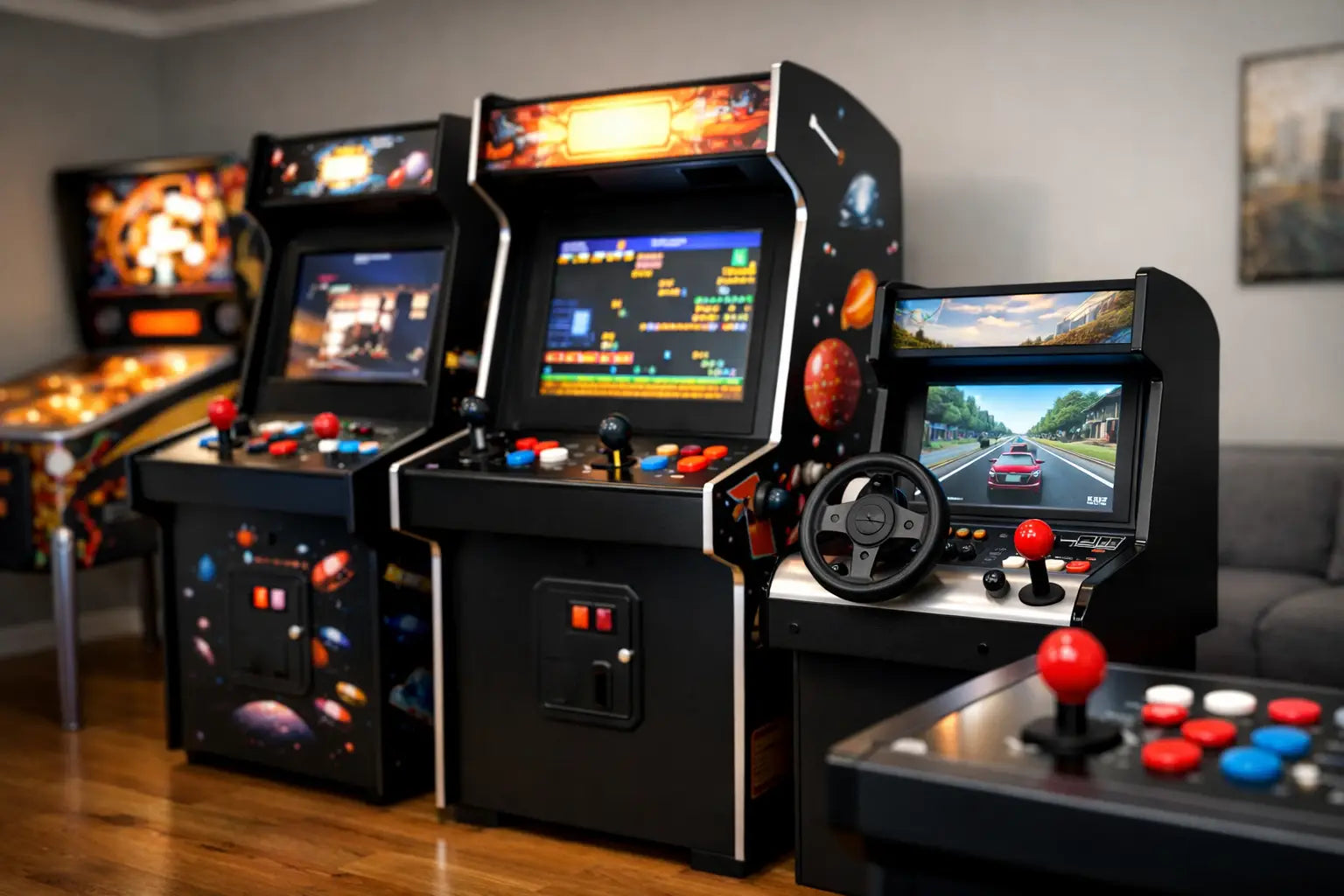
Full-size stand-up cabinets
If your goal is impact, this is where to look first. Full-size cabinets offer the strongest arcade atmosphere and usually provide the most comfortable standing play. They work especially well in basements, rec rooms, and entertainment spaces where the machine is meant to be a visual centerpiece.
This style is ideal for buyers who want the social side of arcade gaming. Friends recognize it instantly, kids gravitate toward it, and adults tend to linger around it longer than they do around smaller options. The trade-off is obvious - these machines demand space, and not just floor space. You also need enough clearance for players to stand comfortably and move around each other.
Sit-down cocktail tables
Cocktail arcade tables bring a different kind of appeal. They blend gaming with furniture, which makes them a smart option for homes where aesthetics matter as much as gameplay. In the right room, they look more intentional than a traditional cabinet and can fit naturally into a lounge, game room, or multipurpose entertaining area.
The play style is also different. These machines are especially fun for classic titles that suit face-to-face play. The compromise is ergonomics. Some people love the retro social feel, while others find long sessions less comfortable than standing at a vertical cabinet.
Countercade and compact machines
Not everyone wants to commit an entire corner of the house to arcade gear. Compact machines make sense for apartments, home offices, bedrooms, and secondary gaming areas. They are also a practical entry point for buyers who want the arcade vibe without going all-in on a full cabinet.
This category works best when expectations are realistic. Compact models can be fun, stylish, and surprisingly capable, but they are not trying to replicate the same presence or control spacing as a commercial-style machine. If you want occasional play and smaller-room flexibility, they can be a great fit. If you want the full arcade ritual, you may outgrow them.
Multiplayer and specialty cabinets
Some of the most exciting options in this category are built around a specific experience - fighting games, driving games, trackball classics, pinball-style digital machines, or multiplayer party cabinets. These are often the most satisfying purchases for enthusiasts because they are designed around a play style rather than a generic feature list.
The upside is focus. A driving cabinet with the right controls or a fighting cabinet with the right layout can feel dramatically better than a broad all-in-one unit. The downside is narrower appeal if your household wants more variety. These machines shine brightest when you already know what kind of gameplay you come back to most.
How to choose the best home arcade machines for your space
Start with the room, not the game list. That sounds less exciting, but it leads to better buying decisions. Measure width, depth, and ceiling clearance, then think about traffic flow. A cabinet that technically fits may still feel awkward if it crowds a sofa, blocks storage, or leaves no room for two players to stand comfortably.
After that, think about who will use it most. A solo player chasing nostalgia might be happiest with a dedicated retro cabinet. A family with kids may get more value from a machine with broader game variety and approachable controls. If you host often, multiplayer appeal becomes much more important than a long feature sheet.
Screen size and audio deserve attention too. Larger displays usually feel better on full-size cabinets, but quality matters more than raw size. Clear visuals, good viewing angles, and sound that feels full without becoming harsh will do more for day-to-day enjoyment than specs that look impressive on paper.
It is also smart to think about assembly and long-term ownership. Some cabinets are easier to place and set up than others. Weight, doorway access, stair navigation, and final room placement are all worth considering before you buy. Premium game room gear should feel exciting when it arrives, not like a logistics problem.
Features that matter more than marketing
When comparing models, focus on the details that affect actual play. Control quality is at the top of the list. Buttons should feel consistent, joysticks should respond predictably, and multiplayer spacing should not feel cramped. These are the features you notice every single session.
Cabinet design is next. Artwork matters because this is a display piece as much as it is a gaming product. A machine with strong design language can elevate the room even when nobody is playing it. For many buyers building a premium home entertainment setup, that visual impact is part of the value.
Online connectivity can be useful, but only if it supports the experience you want. For some players, leaderboards and connected features add replay value. For others, local play and reliability matter far more. The same goes for stools, risers, light-up marquees, and upgraded speakers. Nice extras can absolutely improve the experience, but they should support the machine, not distract from mediocre fundamentals.
Common mistakes buyers make
One of the biggest mistakes is buying based on nostalgia alone. Loving a game in an arcade twenty years ago does not always mean you want that exact experience as the centerpiece of your home. The better question is whether you will still want to play it regularly in your current lifestyle.
Another mistake is underestimating how visible the machine will be. Arcade cabinets are not subtle. In an open-concept home, style and finish matter more than many buyers expect. A machine that clashes with the room can start to feel less like an upgrade and more like clutter, even if the gameplay is solid.
Price can be misleading too. The cheapest option is not always the best value, especially in enthusiast categories where build quality and control feel make such a big difference. But the most expensive machine is not automatically the winner either. Sometimes the smartest purchase is the one that fits your room, your favorite genre, and your actual habits without overbuying.
Where premium buyers should focus
If you are building a serious home entertainment setup, think bigger than the cabinet alone. The best results come from treating arcade gear as part of a complete room experience. Lighting, seating, floor protection, nearby storage, and even adjacent products like racing simulators or game tables can shape how often the machine gets used.
That is where a curated retailer can make the process easier. Instead of looking at arcade machines in isolation, you can shop them alongside other enthusiast-grade home tech and recreation products that fit the same lifestyle. For buyers who care about quality, presentation, and a room that feels intentionally built, that broader view matters.
At Your Tech Haven, that premium mindset is part of the appeal. The right machine is not just a fun purchase. It is a future-ready entertainment upgrade that brings more energy, personality, and replay value into your home.
The best home arcade machines are the ones that match the way you actually live - the room you have, the games you return to, and the kind of experience you want guests to remember after they leave.