Best Drone Accessories for Beginners
The first time you bring a drone into the air, one thing becomes obvious fast - the drone itself is only part of the experience. A solid beginner setup gets better with the right support gear, and the best drone accessories for beginners are the ones that make flying easier, safer, and more enjoyable without turning a simple hobby into a complicated shopping list.
That matters because new pilots usually do not need every add-on in the category. They need the few accessories that solve real problems: short flight times, awkward charging, rough landings, lost props, and carrying sensitive gear from one location to another. If you start with those pain points, you make smarter buys and build a setup that actually improves your time in the air.
Which drone accessories for beginners matter most?
If you are buying your first accessories, think in terms of function rather than hype. The smartest early upgrades usually protect your drone, extend flying time, and reduce common mistakes. That means batteries, propellers, charging gear, carrying protection, and a safe launch surface tend to earn their place first.
Some add-ons look exciting but do very little for a new pilot. Cosmetic upgrades, niche camera filters, or specialty mounts can wait until you know how and where you like to fly. Early on, confidence and reliability beat customization every time.
Extra batteries are the easiest upgrade
Most beginners underestimate how quickly flight time disappears. Wind, practice maneuvers, camera use, and cautious hovering all drain batteries faster than expected. One battery can make a drone feel limited. Two or three can turn the same session into a real learning experience.
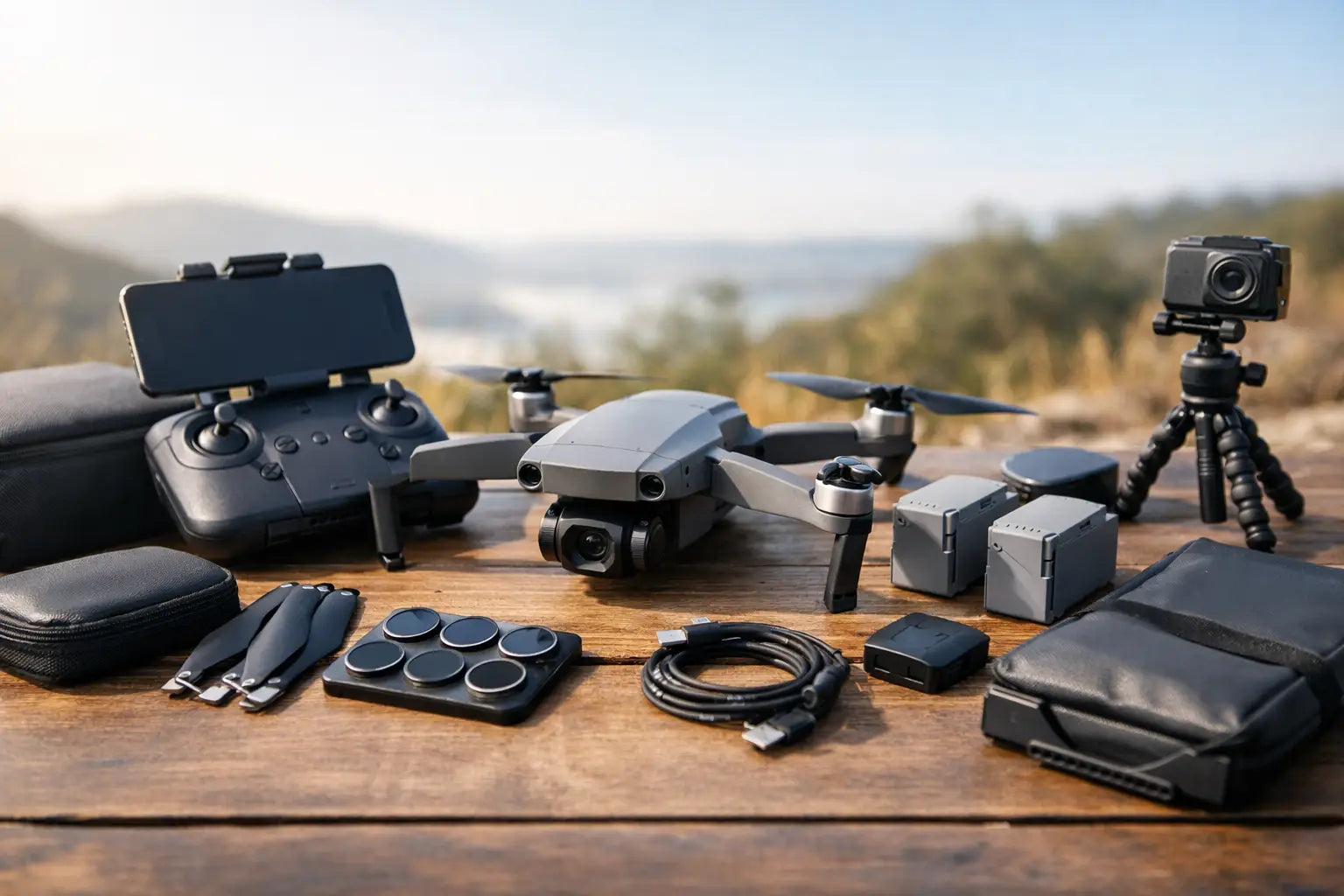
That is why extra batteries are often the single best accessory purchase for a first-time owner. They let you practice more, adjust after mistakes, and spend less time packing up just when you are getting comfortable. If your drone supports an official intelligent battery system, sticking with manufacturer-approved options is usually worth it for safety, fit, and reliable charge reporting.
A charging hub keeps your setup moving
Once you own more than one battery, charging gets messy if you rely on one cable at a time. A charging hub or multi-battery charger adds convenience, but more importantly, it keeps your kit organized and ready. For anyone using their drone on weekends, road trips, or content shoots, this accessory pays off quickly.
It also reduces the friction that kills hobbies. When your batteries are charged, labeled, and easy to manage, you fly more often. For a beginner, that consistency matters more than chasing advanced accessories too early.
Protection accessories beginners should not skip
Crashes are not guaranteed, but rough landings and minor contact are common when you are learning. The right protective accessories do not make you invincible, yet they can lower the cost of early mistakes.
Spare propellers are essential, not optional
Propellers take abuse. A light strike against a branch, a hard case bump, or an imperfect landing can nick or crack them. Even small damage can affect flight stability and safety, so having spare propellers on hand is basic preparation, not overkill.
New pilots should keep at least one full spare set, and ideally more if they plan to fly regularly. Make sure they are the correct match for your exact drone model. This is one of those accessories you hope to ignore until the moment you absolutely need it.
A landing pad helps more than people expect
A portable landing pad sounds simple, and it is, but it solves several beginner problems at once. It gives you a clean visual target for takeoff and landing, helps keep dust and grass away from motors and cameras, and protects your drone when flying in parks, gravel lots, or uneven ground.
For camera drones especially, reducing debris at launch is a real quality-of-life improvement. It also makes your setup look and feel more intentional, which is useful when you are building confidence in public spaces.
A carrying case protects your investment
Throwing a drone into a backpack with loose cables and batteries is not a premium move. A dedicated case or well-designed drone bag keeps the aircraft, controller, charger, props, and accessories protected and easy to transport. For many beginners, this is what turns a drone from a fragile gadget into gear they actually bring along.
Hard cases offer better impact protection, while soft cases or shoulder bags are easier for casual travel. The better option depends on how you use your drone. If you drive to local spots and want maximum protection, a hard case makes sense. If you hike or pack light, a compact soft case may be the better fit.
Accessories that improve the flying experience
Once the basics are covered, the next tier of drone accessories for beginners should improve control, visibility, and convenience. These upgrades are not always mandatory, but they can make the learning curve smoother.
Controller screen accessories can reduce frustration
If your controller uses a phone, a sun hood or screen shade can make outdoor viewing much easier. Bright daylight can make telemetry, camera framing, and alerts harder to read, especially for new pilots who are already splitting their attention.
This is not the flashiest accessory, but it is practical. Better screen visibility means fewer missed warnings and less guesswork during flight.
Memory cards matter for camera drones
If your drone shoots photos or video, a quality microSD card is part of the system, not an afterthought. Slow or low-quality cards can create recording issues, while insufficient storage cuts sessions short. Beginners often focus on the drone camera specs and forget the storage media that supports them.
Choose a card that meets the drone manufacturer's speed recommendations. Bigger is not always better if you prefer to organize shorter sessions, but dependable write speed is worth prioritizing from day one.
Propeller holders and cable organizers keep things tidy
Small accessories can make a surprising difference in everyday use. Propeller holders help prevent blades from flopping around in transit, and cable organizers stop chargers and controller wires from turning into a mess in your bag.
These are not must-haves before batteries and spares, but they are smart finishing touches once your kit grows. If you like gear that feels organized and ready, these add-ons support that premium ownership experience.
Accessories beginners can wait on
Not every accessory deserves a spot in your first cart. Neutral density filters, range extenders, aftermarket sticks, loud visual skins, and specialty mounts can all be useful in the right situation, but most are better as second-wave purchases.
Filters are a good example. They matter more once you understand shutter speed, lighting conditions, and your video style. For a brand-new pilot practicing takeoffs, returns, and framing, they often add complexity without solving a pressing problem. The same goes for accessories marketed around extreme range or advanced shooting scenarios. Those features may sound exciting, but they usually matter less than battery life, safe transport, and spare parts.
How to build the right beginner kit
The smartest way to shop is to match accessories to how you plan to use the drone. A casual flyer who mostly shoots family trips and weekends at the park needs a different setup than a buyer interested in real estate clips, outdoor travel content, or regular scenic footage.
If your priority is practice, start with extra batteries, spare propellers, and a landing pad. If your priority is travel, add a carrying case early. If your focus is photo and video, make room for memory cards and possibly filters later, after you have more time in the air. There is no perfect universal bundle, and that is the point. A better setup is one built around your actual habits.
For many shoppers, this is where a curated retailer makes a difference. Instead of chasing random add-ons, you can focus on accessories that fit your drone model, your budget, and your goals. That is a better path than buying a pile of gear that looks impressive but solves nothing.
What to look for before you buy
Compatibility comes first. Drone accessories are rarely universal, and small differences in model generation can matter. Always verify fit, charging support, battery type, and controller compatibility before checking out.
Quality matters too, especially with batteries, chargers, and propellers. This is not the category where the cheapest option is always the smart one. With airborne tech, reliability has real value. Premium gear costs more up front, but it often saves money, frustration, and downtime over time.
It is also worth paying attention to how complete the accessory is. A carrying case with poor internal layout or a charger without the right cables can create more friction than it removes. The goal is not just to buy more gear. It is to create a setup that feels ready every time you want to fly.
A beginner drone setup gets better fast when each accessory earns its place. Start with the items that protect your investment, keep you in the air longer, and remove avoidable hassles. Once flying feels natural, you can expand with more specialized gear and shape a kit that matches how you want to create, explore, and enjoy the technology.