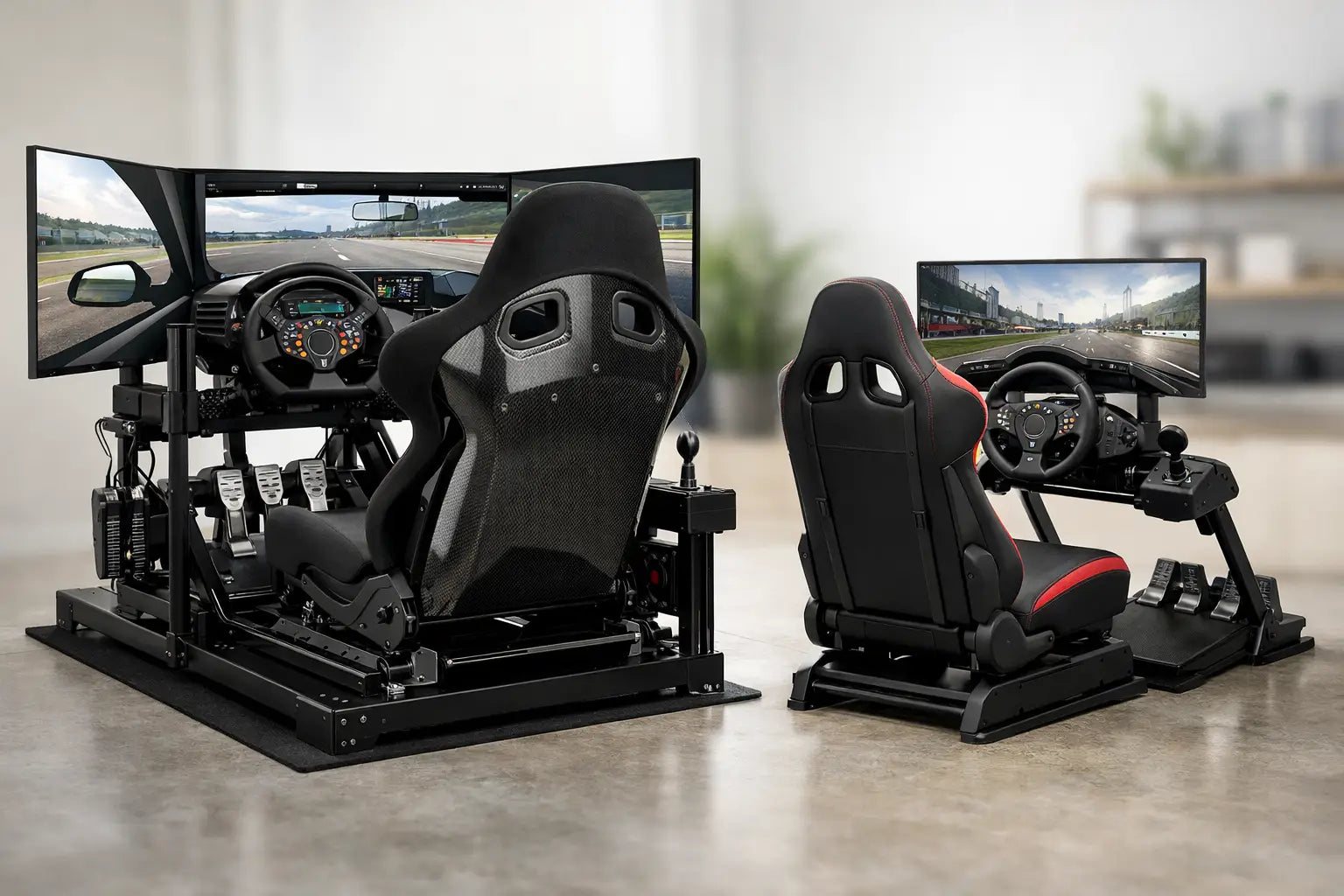
Racing Simulator vs Gaming Cockpit: Which Fits?
The first hard braking zone tells you what your setup is made of. If your seat flexes, your pedals slide, or your monitor sits too high, the illusion disappears fast. The racing simulator vs gaming cockpit question is really about how far you want to take the driving experience - and which investment makes sense for your space, hardware, and goals.
For some players, a compact cockpit and a capable wheel are the perfect way to turn a spare corner into a track-ready escape. For others, a full simulator becomes the centerpiece of a game room, combining a rigid chassis, direct-drive wheelbase, load-cell pedals, displays, audio, and sometimes motion. Both can deliver serious fun. The difference is in the depth of immersion, the commitment of space, and the upgrade path you want to own.
Racing Simulator vs Gaming Cockpit: The Core Difference
A gaming cockpit is the physical foundation: a seat, mounting frame, wheel deck, pedal tray, and often a shifter mount. It gives your racing gear a fixed, driving-focused position instead of relying on a desk chair or folding stand. Think of it as the chassis for your home racing setup.
A racing simulator is the complete experience built around that foundation. It may include the cockpit, but it also brings together the wheel and pedals, a gaming PC or console, one or more displays or a VR headset, speakers or headphones, and optional performance upgrades such as a handbrake, button box, bass shakers, or motion system.
The terms are often used interchangeably in shopping conversations, which can create confusion. A premium racing cockpit can be a major part of a simulator, but it is not necessarily a complete racing simulator by itself. Before comparing prices, confirm what is included. A striking product image may show screens, wheelbases, pedals, and accessories that are sold separately.
Choose a Gaming Cockpit When the Foundation Matters Most
A dedicated cockpit is usually the smartest first purchase for players graduating from a desk setup. It improves consistency immediately because the seat, wheel, and pedals remain in the same position every session. That matters when you are learning braking points, dialing in trail braking, or simply trying to stop your pedal set from creeping away during a close race.
The right cockpit also helps protect your investment in better controls. Entry-level gear can work well on a lighter frame, but stronger wheelbases and stiff brake pedals create forces that expose weak mounting designs. Flex at the wheel deck can make force feedback feel less precise. Pedal movement can make braking less repeatable. A solid aluminum-profile or reinforced tubular cockpit is built to handle those demands with greater confidence.
Gaming cockpits fit a wide range of buyers. A console racer may want a compact, compatible rig for weekend sessions in the living room. A PC enthusiast may need an adjustable platform that can evolve from a belt-driven wheel to a direct-drive setup. A family building a premium game room may value the clean, intentional look of a mounted seat and controls over a tangle of gear around a desk.
The trade-off is that a cockpit does not create immersion on its own. You will still need to select compatible electronics, displays, and audio. That is a benefit if you want control over every component, but it requires more research than purchasing a configured simulator package.
What to check before buying a cockpit
Start with rigidity, not appearance. Look at the wheel mount, pedal deck, cross-bracing, and stated compatibility with the wheelbase and pedals you plan to use. A cockpit that is excellent for a lighter setup may not be the right match for a high-torque direct-drive base or load-cell brake pedal.
Adjustability is the next priority. You should be able to set a comfortable distance to the wheel and pedals, adjust the seat position, and achieve a natural wheel height. If multiple people will use the rig, sliding seat rails and flexible mounting options make a real difference.
Finally, measure the room with the display configuration in mind. The cockpit footprint is only part of the equation. Triple monitors need width, VR needs clear standing room, and a mounted TV may require additional depth and cable planning.
Choose a Full Racing Simulator for Maximum Immersion
A complete racing simulator is designed to make your home setup feel less like a game station and more like a purpose-built driving environment. The cockpit puts your body in position, the wheel communicates grip and weight transfer, the pedals reward controlled inputs, and the display system gives every corner a stronger sense of speed.
This option makes sense when racing is a central hobby, when you host friends for game nights, or when you are creating a standout entertainment space. It can also be a compelling choice for content creators who need an impressive, repeatable on-camera setup. A well-planned simulator looks premium, but more importantly, it reduces setup friction. You sit down, power on, and drive.
Display choice shapes the experience. A single ultrawide monitor offers a clean, focused view without demanding too much space. Triple monitors create an expansive field of vision that helps with side-by-side racing and corner awareness. VR can deliver exceptional scale and presence, though comfort, computer performance, and headset preference vary from person to person.
Motion systems, tactile transducers, and advanced audio can add another layer, but they are not required for a thrilling setup. In fact, many racers gain more from upgrading pedals and cockpit stability before adding motion. Precision controls and a rigid seating position make every lap more repeatable, while motion is a premium enhancement for buyers who want the full sensory experience.
The hidden cost is not always the hardware
A simulator can require more planning than its price tag suggests. You may need a stronger PC for high-resolution triple displays, a dedicated power strategy for multiple components, cable management, and room for maintenance. If you rent, move often, or share a multipurpose room, a large permanent setup can become inconvenient even if you love the performance.
There is also a learning curve. Sim racing rewards practice, and sophisticated hardware can reveal mistakes more clearly than casual controls. That is part of the appeal for enthusiasts, but it is worth considering if your goal is relaxed arcade-style driving with minimal setup time.
Build Around Your Driving Style, Not Just Your Budget
Budget matters, but buying the most expensive configuration available is not automatically the best route. A balanced system outperforms a collection of mismatched premium parts. A rigid cockpit with quality pedals and a well-positioned single display can feel more convincing than a visually extravagant setup with poor ergonomics.
If you mainly play arcade racers, a space-efficient gaming cockpit with a dependable wheel and pedal set may deliver everything you need. You will get the physical driving position, cleaner control placement, and a far more engaging experience than a controller without dedicating an entire room to the hobby.
If you spend hours in iRacing, Assetto Corsa Competizione, Gran Turismo, or Formula-style simulations, prioritize consistency. A stable cockpit, responsive wheelbase, and brake pedal you can modulate precisely are foundational upgrades. From there, expand to better displays, shifters, handbrakes, and tactile feedback as your preferences become clearer.
For a premium home entertainment build, consider the whole room. A racing simulator can complement arcade equipment, high-end gaming furniture, and a large-format display to create a destination rather than a single-use corner. The best setups invite people to take a seat while still looking polished when they are powered off.
Space, Comfort, and Upgrade Planning
Comfort is performance equipment. A seat that looks like a race bucket but causes pressure points after 30 minutes will limit how often you use the rig. Consider your typical session length, body type, ventilation, lumbar support, and whether you prefer a GT-style seating position or a lower formula-inspired posture.
Do not overlook entry and exit. Deep racing seats and tightly mounted wheel decks can be less convenient for users with mobility concerns or for a shared household. A slightly more accessible seating arrangement may be the better long-term choice, especially in an entertainment room where guests will use the setup.
Upgrade planning prevents expensive do-overs. Choose a cockpit with mounting flexibility and enough structural strength for the equipment you expect to own in a year or two. You do not need to buy every accessory on day one. A future-ready frame lets you add a stronger wheelbase, upgraded pedals, a monitor stand, or a shifter mount when the time is right.
Your Tech Haven customers often invest in technology that earns its place at home through better experiences, not just bigger specifications. That same mindset applies here: choose the setup that makes you eager to drive more often, not the one that only looks impressive in a product photo.
A gaming cockpit is the focused first step for many racers. A full racing simulator is the destination for players ready to turn driving into a complete home experience. Leave room for the setup to grow, keep ergonomics at the center of every decision, and build the kind of cockpit that makes one more lap feel like the obvious choice.