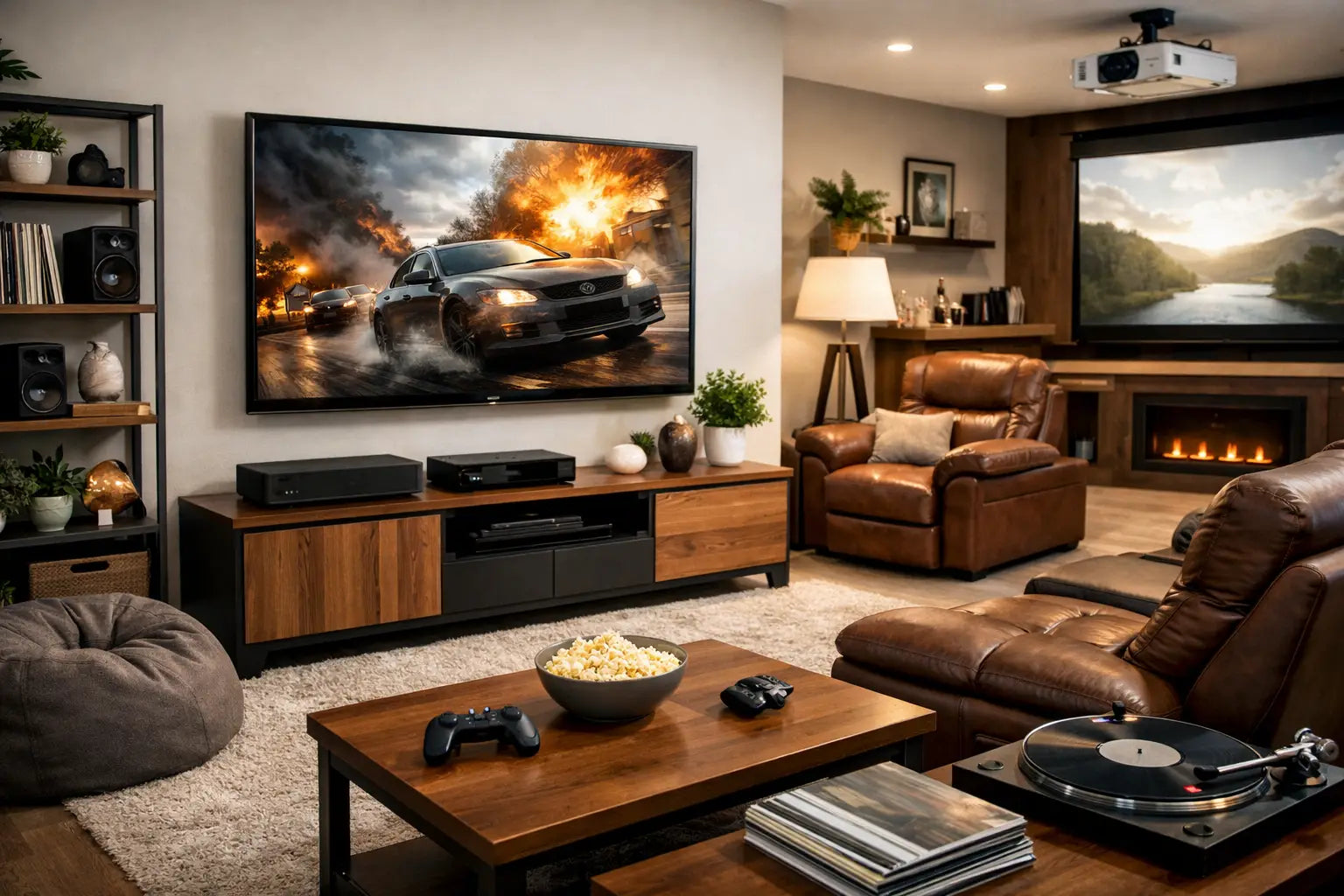
11 Home Entertainment Furniture Ideas
A great screen and powerful speakers can carry a room only so far. The difference between a setup that feels expensive and one that actually works every day usually comes down to the furniture. The best home entertainment furniture ideas solve two jobs at once - they make your gear look intentional, and they make the whole experience easier, cleaner, and more immersive.
If you're upgrading a media room, building a game room, or carving out a premium setup in a shared living space, furniture choices matter more than most buyers expect. Size, cable routing, ventilation, storage, and seating position all change how your entertainment gear performs. Good furniture is not just decor. It is infrastructure for the experience you want.
Home entertainment furniture ideas that improve performance
The strongest setups start with furniture that supports how you actually use the room. A family movie space has different priorities than a racing simulator corner or a console-heavy gaming lounge. That sounds obvious, but it is where many rooms go wrong - people buy around looks first and function second.
A low-profile media console is still one of the smartest starting points. It keeps the screen visually grounded, hides accessories, and gives you a clean base for a TV, soundbar, receiver, or streaming hardware. The trade-off is that not every stylish unit is designed for modern electronics. Closed cabinets can trap heat, and shallow shelves can make larger components hard to fit. If you use higher-powered AV gear, ventilation and internal dimensions matter as much as finish and color.
Wall-mounted storage is another strong move when floor space is limited. Floating cabinets and shelves create a lighter look and leave room underneath for subwoofers, accent lighting, or easy cleaning. This works especially well in modern spaces where you want a minimal footprint. The downside is flexibility. Once mounted, reconfiguring the layout is harder, so it pays to think through cable paths and upgrade plans before installation.
For buyers with larger rooms, modular furniture brings more long-term value than a fixed one-piece unit. A modular media wall can grow with your system, whether that means adding console storage, display shelving for collectibles, or side cabinets for game libraries. It also helps if your room pulls double duty as a lounge, office, or creator space. Future-ready furniture is not always the flashiest option on day one, but it usually ages better as your gear changes.
The best home entertainment furniture ideas by room type
In a dedicated media room, the furniture should control distractions. That often means darker finishes, lower-glare surfaces, and storage that hides visual clutter. A broad media console paired with enclosed side cabinets works well here because it keeps the room focused on the screen instead of the accessories around it. If you have a projector setup, a slimmer front wall arrangement can leave more space for surround speakers and a cleaner sightline.
In a living room, flexibility matters more. Most people are balancing entertainment with everyday life, so the furniture needs to feel polished when the TV is off. This is where multi-use pieces shine. A console with concealed storage, a lift-top coffee table for controllers and remotes, and accent cabinets that can hold both decor and tech accessories can make the room feel finished instead of overly electronic. The goal is not to hide the technology completely. It is to integrate it with enough confidence that the room still feels elevated.
Game rooms need a different kind of planning. Console stations, arcade machines, game tables, and simulator rigs all compete for square footage. In this kind of room, zoning is everything. Instead of one oversized entertainment center, it often makes more sense to use several purpose-built furniture zones - one for the main display, one for seated gaming, and another for storage or collectibles. That layout creates better flow and keeps the room from feeling like a warehouse of great gear.
Smaller apartments and bonus rooms benefit from vertical thinking. Tall cabinets, corner units, and floating shelves can expand storage without eating up floor space. A narrow console paired with a wall-mounted TV can still feel premium if the proportions are right. Compact does not have to mean basic. It just means every inch has to earn its place.
Seating is entertainment furniture, not an afterthought
People often focus on where the screen goes and leave seating until the end. That is backwards. The seat determines comfort, posture, and how long you want to stay in the room. If your setup includes long gaming sessions, sports nights, or movie marathons, seating is one of the highest-impact upgrades you can make.
For cinematic spaces, reclining theater seating delivers the obvious comfort benefits, but it also helps define the room as an experience zone. Cupholders, arm storage, and power recline features can make the space feel more premium and more practical. Of course, large recliners need space to breathe. In tighter rooms, a compact loveseat or sofa with clean sightlines may be the smarter call.
Gaming spaces open up even more possibilities. Performance seating, gaming chairs, and simulator seating can improve support and immersion in ways a standard couch cannot. The right choice depends on use case. A casual console room may be best with a sectional and an ottoman, while a racing setup deserves dedicated simulator seating that locks in the experience. It depends on whether the room is built for lounging, competing, or both.
Ottomans and benches deserve more attention too. Storage ottomans can hide accessories while adding flexible seating, and padded benches work well against a wall when you need extra capacity without the bulk of another recliner. These pieces are especially valuable in mixed-use rooms where versatility matters.
Storage and cable control separate premium rooms from messy ones
No one spends serious money on entertainment gear hoping to stare at tangled wires and stacked accessories. Clean organization is part of the luxury feel. That is why some of the best furniture ideas are not about the statement piece. They are about what the room looks like after six months of real use.
Choose furniture with built-in cable management whenever possible. Rear cutouts, internal channels, and power-friendly compartments keep cords from becoming the visual center of the room. This is not just about looks. Good cable control makes gear swaps and troubleshooting much easier.
Dedicated storage for controllers, headsets, remotes, charging docks, and physical media also changes the day-to-day experience. Open shelving can look great for display pieces, but closed storage wins when you want the room to stay calm and polished. A balanced approach usually works best - display what adds personality, hide what creates clutter.
If you own multiple consoles, handhelds, or accessories, consider furniture that allows category-based storage. One drawer for controllers, one cabinet for charging, one shelf for boxed games or VR gear. That level of organization sounds minor until you use the room every night. Then it becomes one of the features you appreciate most.
Materials, finishes, and scale matter more than trends
It is easy to get pulled toward whatever looks bold in a showroom or on social media, but entertainment furniture has to work with equipment, lighting, and traffic flow. Glossy finishes can reflect screen light. Extremely dark furniture can look sleek, but it may show dust faster. Open metal frames feel modern, yet they can expose every cable if the setup is not carefully planned.
Wood finishes tend to be the most forgiving and versatile, especially in living rooms where you want warmth around larger screens. Matte black and charcoal finishes fit naturally in gaming and media rooms because they reduce visual noise and lean more cinematic. Glass can look premium in the right setting, but it demands more upkeep and usually works best as an accent rather than the dominant material.
Scale is where many rooms lose balance. Furniture that is too small makes a premium TV look oversized and awkward. Furniture that is too large can overpower the room and reduce usable space. A good rule is to think beyond screen width and consider everything the furniture needs to hold now and later. If upgrades are likely, buy with that future in mind.
Build for the experience you want next
The smartest home entertainment furniture ideas are not just about fitting today's gear. They create a space that still feels exciting after the novelty wears off. Maybe that means a modular media wall that can grow into a full game room. Maybe it means dedicated simulator seating, hidden storage, and a console that finally makes the room feel complete.
At Your Tech Haven, that future-ready mindset is what makes a room feel less like a collection of products and more like a destination inside your home. Buy furniture the same way you buy premium tech - with a clear purpose, enough flexibility to grow, and just enough ambition to make the upgrade feel worth it every time you walk in.