3D Printers: Choose the Right Machine for You
A 3D printer earns its place in a serious home setup when it stops being a novelty and starts solving real creative problems. One week, it might produce custom cable guides for a racing simulator. The next, it could create prototype enclosures, replacement parts, cosplay details, tabletop terrain, or product samples that would be expensive and slow to source any other way.
For makers, gamers, designers, and hands-on tech enthusiasts, the right machine turns an idea into a physical object on demand. But not all printers deliver the same experience. Print quality, material compatibility, build volume, speed, and the amount of tuning required all shape whether a printer becomes a favorite tool or an underused project in the corner.
What 3D Printers Can Bring to Your Space
The appeal of 3D printing is control. Instead of choosing from what is available, you can make parts that fit your exact purpose. A creator building a camera rig can fabricate mounts around a specific accessory. A gaming enthusiast can organize a desk with custom headphone hooks and controller stands. A small business can test a concept before committing to a costly production run.
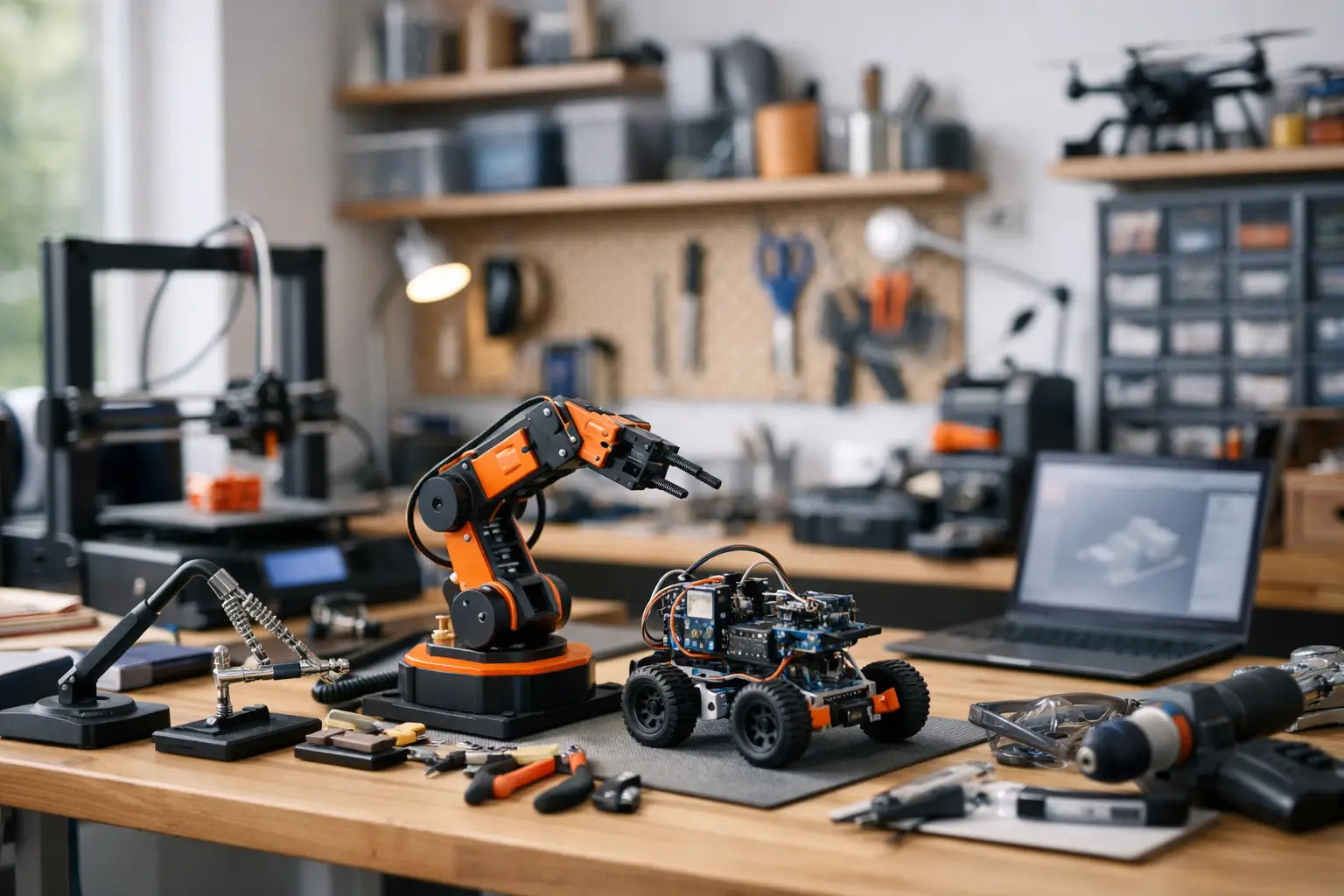
That flexibility also makes a printer a strong fit for a premium home workshop, studio, or makerspace. It pairs naturally with 3D scanners, electronics tools, CNC equipment, and even a well-designed gaming room. The best projects often solve a small but persistent annoyance: a bracket that does not exist, a drawer insert that needs an unusual measurement, or a display stand that deserves a cleaner presentation.
The trade-off is that 3D printing is not completely push-button. Modern machines have made setup far easier, especially models with automatic bed leveling, enclosed chambers, and guided calibration. Still, successful printing involves learning how materials behave, preparing digital files, and recognizing when a design needs better support or a different orientation. For many owners, that learning curve is part of the reward.
The Main Types of 3D Printers
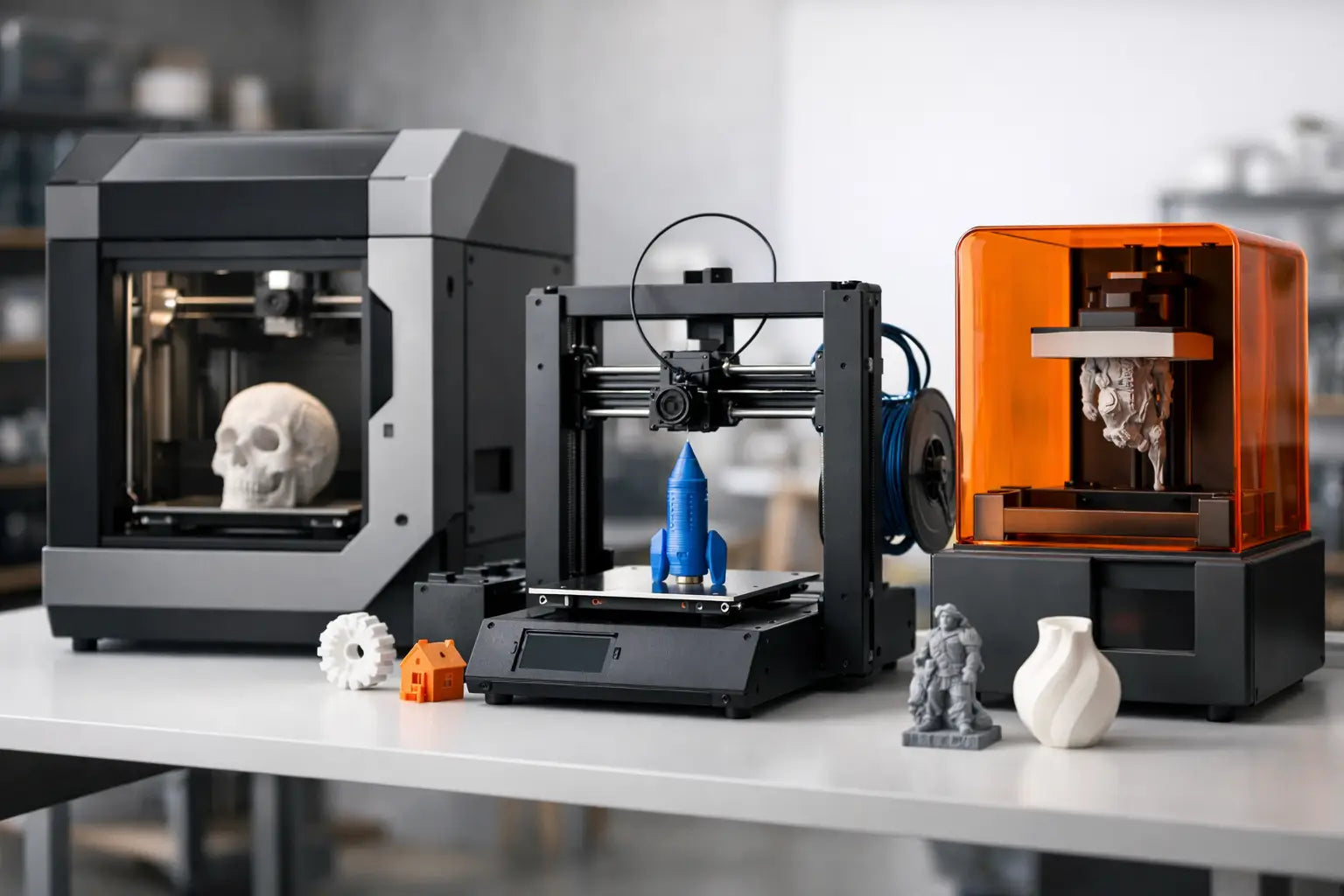
Most home and enthusiast buyers will choose between filament-based FDM printers and resin-based MSLA printers. Both can create impressive results, but they shine in different projects.
FDM printers for functional, larger-scale builds
FDM, or fused deposition modeling, printers melt a plastic filament and lay it down in precise layers. This is the format most people picture when they think of 3D printing. It is a smart choice for larger functional parts, organizers, brackets, enclosures, props, prototypes, and workshop accessories.
FDM printers are generally easier to manage in a home environment because common materials such as PLA are affordable and relatively straightforward to print. They also offer generous build volumes, making them useful for full-size helmet components, game-room accessories, drone parts, and larger prototypes.
Layer lines are more visible on an FDM print than on a quality resin print, particularly at faster settings. That may not matter for a tool holder or structural part. For display pieces, sanding, priming, painting, or choosing a fine layer height can produce a far more polished finish.
Resin printers for high-detail work
Resin printers use light to cure liquid resin layer by layer. Their strength is detail. Miniatures, jewelry masters, intricate figurines, dental-style models, small product components, and finely textured collectibles can look remarkably sharp when produced on a capable resin machine.
Resin printing requires more deliberate handling. You need gloves, cleaning supplies, a wash-and-cure process, and a well-ventilated work area. The resin itself must be stored and disposed of responsibly. Build sizes are often smaller than comparable filament machines, although larger resin models are available for ambitious projects.
Choose resin when surface detail is the priority and you are prepared for the post-processing workflow. Choose FDM when you want versatile, practical, often larger objects with simpler material handling. Some advanced makers eventually own both because the applications overlap less than many first-time shoppers expect.
Features That Matter More Than Marketing Claims
A long feature list can look impressive, but a few capabilities make the biggest difference in day-to-day ownership. First is reliability. A printer that completes consistent jobs with limited babysitting is usually more valuable than a faster model that needs constant adjustment.
Automatic bed leveling is one of the most useful quality-of-life features on an FDM machine. The first layer determines whether the rest of a print succeeds, and automated leveling helps the nozzle maintain the correct distance from the build surface. It does not remove every possible issue, but it reduces one of the most common beginner frustrations.
An enclosed print chamber is another feature worth considering, particularly if you plan to use materials beyond PLA. ABS, ASA, nylon, and other engineering-focused filaments can benefit from stable temperatures and protection from drafts. Enclosures can also provide a cleaner appearance in a finished studio or office. Keep in mind that material requirements vary, and an enclosure is not automatically necessary for every project.
Print speed deserves context. Fast printing is exciting, especially for large parts, but speed alone does not guarantee a better result. High-speed systems need stable frames, accurate motion components, capable cooling, and tuned profiles to maintain detail. A printer that delivers clean, dependable parts at a moderate speed may be the better investment for a creator who values finished work over headline numbers.
Build volume should match the objects you realistically plan to make. A compact machine can handle cable clips, small prototypes, gaming accessories, and many household parts. A larger platform gives you more freedom for helmets, drawer organizers, and full-size functional pieces, but it takes up more room and can add cost. Bigger is useful only if your projects truly need it.
Materials Define What You Can Make
Material choice has a direct effect on durability, appearance, temperature resistance, and print difficulty. PLA is the familiar starting point because it prints cleanly, comes in an enormous range of colors and finishes, and works well for decorative items, prototypes, and everyday accessories.
PETG is a practical step up for parts that need better impact resistance or moisture tolerance. It is often a strong option for organizers, light-duty mechanical components, and items that may see more regular use. TPU adds flexibility, making it suitable for protective feet, grips, cases, and vibration-damping pieces.
For more demanding applications, ABS, ASA, nylon, carbon-fiber-filled blends, and other specialty materials can provide higher heat resistance, strength, or weather performance. They also increase the importance of a compatible hot end, stable temperatures, drying systems, and good print settings. A premium printer is not automatically the right choice if its capabilities exceed the materials and projects you plan to use.
Plan for the Complete Workflow
The printer is one part of the setup. You will also need a stable work surface, storage for filament or resin, basic hand tools, and a computer or tablet for preparing models. For FDM printing, dry filament storage can make a noticeable difference in print consistency, especially in humid environments. For resin printing, dedicated safety equipment and ventilation are non-negotiable.
Software matters, too. Before printing, a digital model must be sliced into layers and instructions the machine can follow. Most popular printers support approachable slicer software with preset profiles, but learning a few settings will dramatically expand what you can achieve. Orientation, supports, wall thickness, infill, and layer height are creative decisions as much as technical ones.
This is also where a 3D scanner can elevate the experience. Scan an existing object, bring its geometry into your design workflow, then build an accessory or replacement piece around it. For custom-fit projects, that combination can save hours of measuring and trial-and-error.
Choosing a Printer With Confidence
Start with the outcome you want, not the largest specification sheet. If you want to make functional accessories, prototypes, organizers, and larger creative builds, a well-supported FDM printer with automatic leveling is usually the strongest first move. If your focus is miniatures, precision art pieces, or small detailed production, resin may be the better match.
Then consider how much time you want to spend learning and maintaining the machine. Enthusiast-grade models often offer more control and broader material support, while beginner-friendly systems emphasize guided setup and dependable default profiles. Neither approach is universally better. The right fit depends on whether you see 3D printing as a finished-result tool, a technical hobby, or both.
At Your Tech Haven, the goal is to help creators build a setup that feels worthy of their ideas, whether that means a polished home makerspace or one high-performance machine beside a gaming desk. Choose a printer that invites you to make the first project, then the tenth. The most rewarding machine is the one that keeps turning curiosity into objects you can use, show, and improve.